
Choosing the Perfect Oak Table for Your Dining Room: A 2026 Guide to Quality and Craftsmanship
What if the "solid oak" table you've been eyeing online is actually little more than a thin layer of wood glued over compressed sawdust? It's a frustrating reality in a market filled with mass-produced flat-pack furniture that lacks both soul and longevity. We believe your home deserves something more authentic. You want a durable, beautiful centrepiece that handles the lovely chaos of family gatherings without the fear of peeling veneers or wobbly joints. Selecting the perfect oak table dining room focal point is about more than just filling a space; it's about investing in a piece of craftsmanship that grows more beautiful with every passing year.
This guide will show you how to distinguish true artisan quality from high-street imitations, ensuring your investment is as sustainable as it is stunning. We'll help you navigate the nuances of timber sourcing and provide practical advice on visualising how a bespoke piece fits into your specific British home. You'll discover the secrets to maintaining a natural finish and why a made-to-order approach is the only way to guarantee a perfect fit. Let's start the journey toward a table that your family will cherish for a lifetime.
Table of Contents
Why Oak Remains the Premier Choice for British Dining Rooms
Step into any historic British manor or a cosy countryside cottage, and you'll likely find a sturdy timber surface at the heart of the home. Oak has long been considered the premier choice for British dining rooms, and for good reason. As a genus (Quercus), oak is a dense, slow-growing hardwood that develops incredible structural integrity over decades. This slow growth creates a tight grain pattern that mass-produced softwoods simply cannot match. In the UK, an oak table is more than just a place to eat; it's a multi-generational anchor. It's the surface where children do their homework and where families gather for Sunday roasts for fifty years or more.
Technically, oak is a powerhouse. It offers several biological advantages that make it ideal for furniture:
Janka Hardness: It ranks high on the hardness scale, meaning it effortlessly resists the daily wear and tear of family life.
Tannin Content: Natural chemicals provide a built-in defence against rot, fungi, and wood-boring insects.
Structural Density: The tight cellular structure prevents the wood from becoming brittle or unstable over time.
Scratches from cutlery or dings from dropped mugs don't ruin the piece; they often just add to its story. These natural defences ensure the wood stays healthy even in the changing humidity of a British home.
The Aesthetic Versatility of Oak Grain
One of the most captivating features we work with in our workshop is the presence of medullary rays. These are the beautiful, silvery flecks that appear across the grain when the wood is quartersawn, creating a unique pattern that no machine can replicate. Unlike the cold, sterile feel of plastic laminates, an oak table dining room centrepiece offers a rich tactile experience. You can feel the history in every ridge. Because of its open-pore structure, oak is also incredibly versatile with finishes. A light natural oil preserves that pale, modern look, whilst a dark hand-applied wax can transform the same piece into a traditional farmhouse staple.
Sustainability and Longevity in 2026
As we move through 2026, the shift away from "fast-fashion" furniture has never been more vital. Investing in a slow-grown oak table is a powerful eco-conscious choice. Because these trees live for centuries, the timber acts as a "carbon sink" for your home, locking away CO2 for the entire life of the furniture. When you consider the "cost-per-year" rather than just the upfront price, the value becomes clear. A cheap, mass-produced table might last five years before it ends up in a landfill. A bespoke oak table will last a century. It's a partnership between nature and craftsmanship that respects the environment as much as it respects your home.
Comparing Oak Varieties: From Character Grade to Reclaimed Timber
Choosing the right timber is the first real step in our partnership. It's where your vision meets the raw material we've spent years mastering. Many high-street retailers hide their wood under thick, muddy stains to mask inferior quality, but we believe in letting the natural beauty of the grain speak for itself. Whether you want the clean lines of Prime Grade or the rugged charm of Character Grade, your oak table dining room focal point should reflect your family's personality. It's not about "good" or "bad" wood; it's about the story you want your furniture to tell for the next century.
We typically categorise our oak into three distinct grades to help you decide:
Prime Grade: This is the minimalist's choice. We select planks with minimal knots and consistent colouration for a sleek, contemporary look.
Character Grade: This is the heart of the British farmhouse. We embrace the natural knots, splits, and grain swirls that make every tree unique.
Reclaimed Oak: These boards carry the marks of a previous life, offering a deep patina and historical narrative that new timber simply cannot replicate.
Each grade offers the same exceptional durability, but the visual impact varies significantly.
European vs. American Oak: A Technical Comparison
European Oak (Quercus robur) is the traditionalist's dream. It's famous for those warm, golden hues that deepen beautifully over time. Because it grows slowly in temperate climates, the grain is incredibly tight and the wood is exceptionally dense. This makes it heavy, reliable, and perfect for a traditional home. American White Oak (Quercus alba) offers a slightly different aesthetic. It's often straighter and more uniform, making it a favourite for modern, minimalist spaces. Whilst both are incredibly durable, the required to work these different species varies. European oak provides that unmistakable "solid" feel when you sit down for dinner, whilst American oak offers a crisp, clean finish.
The Rise of Reclaimed Oak in Modern Design
There's something deeply moving about using timber that has already lived a life. Reclaimed oak often comes from old barns or industrial buildings, carrying a textured, "lived-in" feel that adds instant warmth to a room. Beyond the aesthetic, there's a significant practical benefit. Reclaimed timber has been "seasoned" naturally for decades. This means the internal moisture has reached a perfect equilibrium, which drastically reduces the risk of warping or splitting when it enters the central heating of a modern home. You might hear handmade furniture myths suggesting older wood is less durable, but we find the opposite is true. It's stable, sustainable, and full of soul. If you're unsure which grain suits your space, you can explore our bespoke farmhouse tables to see how these different varieties look when finished by hand.
Bespoke Artisanship vs. Mass-Produced Oak: Spotting the Difference
There is a common misconception that "solid oak" is a universal label for quality. In reality, the term covers a vast spectrum of construction methods, from factory-line assembly to genuine workshop craft. The life of your oak table dining room centrepiece begins long before the first cut is made. It starts with kiln-drying. We ensure our timber is dried to a specific moisture content, usually between 8% and 10%, which is essential for the stability of furniture kept in centrally heated British homes. Mass-produced pieces often skip this precision, leading to wood that twists or splits as soon as the radiators come on in winter.
True quality is often hidden beneath the surface. Whilst big-box retailers rely on cam-locks, plastic brackets, and quick-setting glues, we utilise traditional mortise and tenon joinery. This method creates a mechanical bond that strengthens over time rather than degrading. For a deeper look at the technical properties of the timber we use, this Purdue University Extension guide to White Oak explains exactly why these hardwoods are so prized for their workability and strength. We also pay close attention to the underside of the table, using robust bracing to prevent "cupping" across wide surfaces, a detail frequently ignored in factory settings.
The Problem with Factory-Line Furniture
To keep costs low, mass-producers frequently use "finger-jointed" oak. This involves gluing hundreds of small offcuts together in a zig-zag pattern. It creates a busy, cluttered look that lacks the flowing elegance of full-length planks. Furthermore, factory furniture is built to standard sizes that rarely maximise the potential of a unique UK home. Bespoke is a collaborative journey where you, as the homeowner, dictate every dimension and detail of the build. It's about creating a piece that fits your life perfectly, rather than forcing your room to accommodate a standard box size.
The Artisan Advantage: Hand-Finished Quality
Our process involves individual board selection, where we hand-pick planks that complement each other in grain and colour. We then sand each surface through multiple grits until the wood feels like silk to the touch. This hands-on approach means your table is a repairable heirloom. Unlike factory-finished pieces with thick, brittle lacquers that flake off, a hand-oiled bespoke table can be easily refreshed or repaired if life happens. Many of our clients choose to carry this aesthetic through their home, often pairing their dining set with bespoke coffee tables UK homeowners trust for their living spaces. This ensures a consistent level of craftsmanship throughout your interior.
Sizing and Configuration: Finding the Right Fit for Your Space
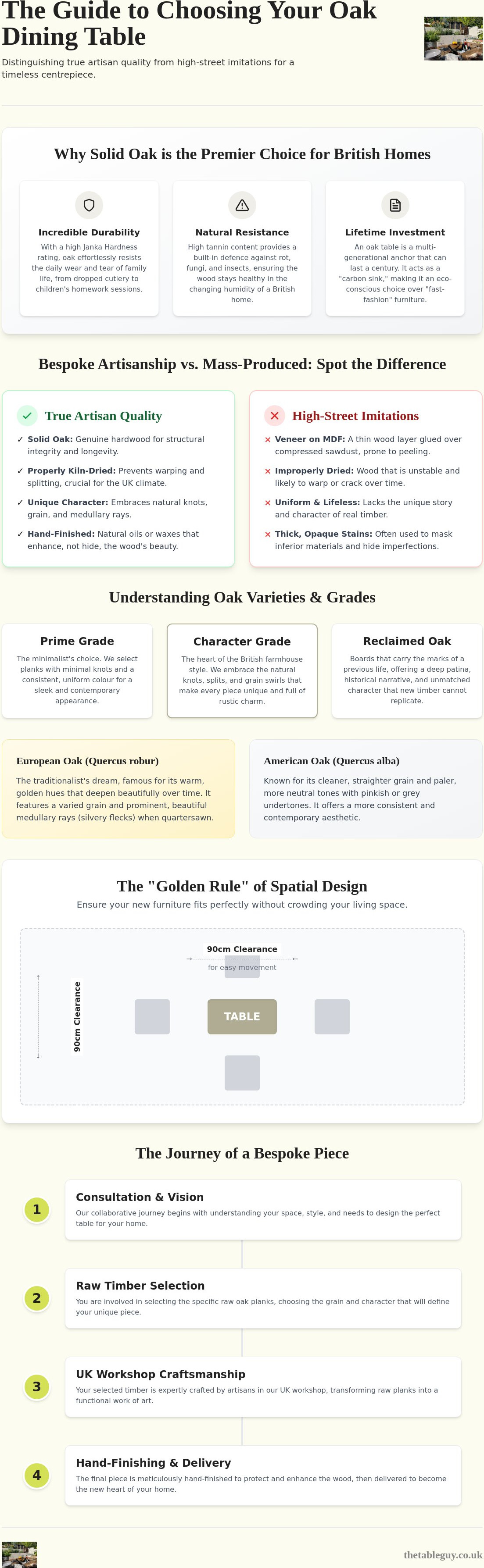
Visualising a large piece of furniture in your home can be daunting. We often see homeowners fall in love with a grand oak table dining room centrepiece, only to find it leaves no room for the people sitting around it. To avoid this, we always recommend the "Golden Rule" of dining room design: leave at least 90cm of clearance between the edge of your table and the nearest wall or piece of furniture. This allows for chairs to be pulled out comfortably and guests to circulate without squeezing. Measure your space carefully. Then measure it again.
The shape of your table also dictates the room's energy. Rectangular tables are the traditional choice for larger families, offering a formal and structured feel. If you prefer a more social atmosphere, round tables encourage conversation amongst all guests, whilst oval designs can soften the lines of a very angular room. Every choice should be a reflection of how you intend to use the space daily.
The Seating Capacity Framework
Comfort is about more than just legroom; it's about elbow room too. We suggest allowing a minimum of 60cm in width for every person at the table. For a standard six-seater arrangement, a length of 180cm is usually ideal. If you're hosting ten people, you'll want to look at 240cm or more. Leg placement plays a crucial role here. Corner legs offer the most stability but can restrict where guests sit. In contrast, a central pedestal or trestle base allows you to squeeze in extra chairs without anyone having to straddle a table leg. Think about your existing chairs as well. Most standard dining chairs require a table height of approximately 75cm to provide a natural, ergonomic seating position.
Bespoke Shapes for Non-Standard Rooms
British homes, particularly older terraces and cottages, often feature narrow galley kitchens or awkward alcoves that don't suit standard furniture. This is where the advantage of a bespoke maker becomes clear. We can "clip" corners to improve traffic flow or adjust the width to ensure a perfect fit in a slim room. You might even choose to integrate unique hosting features, such as our signature Prosecco Dining Tables with built-in ice buckets, making the table a true entertainment hub. Whether you prefer the organic feel of a "live edge" or the crisp lines of a straight edge, the configuration must serve your life. If you need flexibility for larger gatherings, we can craft custom Table Extensions that maintain your daily floor space whilst providing the extra capacity you need for special occasions. This ensures your oak table dining room setup remains practical and beautiful, no matter the guest list.
Commissioning Your Heirloom: The Journey of a Table Guy Bespoke Piece
Commissioning a piece of furniture is a departure from the hurried, impersonal experience of high-street shopping. It is a partnership that begins with a simple conversation about how you live. We guide you through the initial consultation, moving from a rough idea to a final sketch that captures every specific requirement for your home. This is the moment where your oak table dining room vision starts to take a physical form. You aren't just selecting a product code from a catalogue; you're directing the creation of a future heirloom.
The material selection phase is perhaps the most emotive part of the build. We invite you to be part of the process as we select the specific planks that will form your tabletop. Every piece of oak carries its own history in its grain and knots. By hand-picking these boards in our UK workshop, we ensure a level of aesthetic harmony that factory machines simply cannot replicate. Because we are a family-run business based right here in Britain, there are no middle-men to deal with and no overseas shipping delays to worry about. You have a direct line to the people actually cutting the wood.
The final milestone is the delivery and that first family meal. There is a profound sense of satisfaction when a table we've spent weeks perfecting finally takes its place in your home. It's no longer just timber and joinery; it's the setting for decades of stories, celebrations, and quiet morning coffees. We take immense pride in knowing our work serves as the backdrop to your family's most important moments.
Personalisation Beyond Dimensions
Customisation goes far beyond just getting the length and width right. We offer a variety of custom leg options to anchor your piece, from traditional rustic oak to contemporary industrial metal frames. If your family loves to host, we can integrate unique features like built-in ice buckets for our Prosecco Dining Tables or clever cable management for those who use their table as a home office. These details are handled with the same dedication and pride that has defined our workshop since 2014. We remain a human-centric business, valuing the connection we build with our customers as much as the furniture itself.
Next Steps: Bringing Your Vision to Life
Before you get in touch, we recommend taking a moment to measure your space and consider your "hosting peaks." Think about Christmas dinner or big family birthdays where you might need those extra Table Extensions. Consider how many guests you truly want to accommodate at your maximum capacity. Once you have a sense of your needs, we make it easy to get a quote without any of the pressure you'd find in a traditional showroom. We're here to offer expert advice and help you navigate the choices that lead to a perfect finish. When you're ready, you can start your bespoke oak table journey with The Table Guy today. We look forward to helping you create the centrepiece for your family's next great milestone.
Invest in a Centrepiece That Lasts a Lifetime
Choosing an oak table dining room centrepiece is a decision that shapes your home for generations. You now know how to spot the difference between mass-produced veneers and the enduring structural integrity of kiln-dried, solid timber. By prioritising the "Golden Rule" of spatial clearance and embracing the unique character of artisan grades, you're ensuring your home remains both functional and beautiful. Every piece we create is hand-crafted in our UK workshop; we take great pride in our 5-star reviews for artisan quality and our commitment to material authenticity.
We believe that commissioning a table should be an inspiring partnership rather than a stressful transaction. Bespoke dimensions shouldn't add extra complexity to your life; they're simply the key to getting the perfect fit for your family's specific needs. Browse our gallery of bespoke oak dining tables to see the care and dedication we put into every joint and hand-applied finish. We're ready to help you build the heart of your home and look forward to hearing your ideas.
Frequently Asked Questions
How do I maintain a solid oak dining table to ensure it lasts for decades?
Dust your table regularly with a soft, lint-free cloth and apply a fresh coat of natural oil or wax every six to twelve months. This simple routine preserves the wood's moisture balance and builds a beautiful patina over time. Avoid using silicone-based sprays or harsh detergents, as these can strip the protective finish and leave a cloudy residue on the grain.
Will a solid oak table warp or crack over time in a centrally heated home?
No, provided the timber is kiln-dried to a moisture content of 8% to 10% before the build begins. We specifically prepare our wood to thrive in the unique climate of a British home. This careful seasoning process ensures the timber remains stable and prevents the internal stresses that cause mass-produced furniture to twist or split when you turn the radiators on.
What is the difference between "solid oak" and "oak veneer" furniture?
Solid oak is consistent timber through the entire thickness of the board, whilst veneer is merely a paper-thin layer of wood glued over chipboard or MDF. A solid oak table dining room centrepiece is a repairable heirloom that you can sand and refinish for decades. In contrast, veneer is easily damaged and cannot be restored once the thin surface layer is scratched or peeled away.
How much space do I really need around my dining table for chairs?
You should aim for at least 90cm of clearance between the table edge and the nearest wall or furniture. This "Golden Rule" provides enough room for guests to pull out their chairs and circulate comfortably behind those who are already seated. For the seating itself, we recommend allowing 60cm of width per person to ensure everyone has ample elbow room during a meal.
Can I customise the height of my oak table for specific seating needs?
Yes, we can tailor the leg height to suit your specific chairs or benches. Whilst the industry standard is approximately 75cm, our bespoke process allows us to adjust this dimension to ensure perfect ergonomics for your family. This level of personalisation is one of the primary reasons homeowners choose a made-to-order piece over a standard high-street alternative.
How long does it typically take to handmade a bespoke oak dining table?
The typical lead time for a bespoke table from our workshop is 4 to 8 weeks. This timeframe allows us to hand-pick your timber, complete the precision joinery, and apply the final hand-finished coats. The exact duration depends on the complexity of your chosen design and our current order schedule, but we'll always provide a clear timeline before we start work.
Is oak better than pine or mahogany for a daily-use dining table?
Oak is the premier choice for daily use because it is a dense hardwood that resists dents and scratches far better than soft pine. Whilst mahogany is also durable, oak offers a more versatile aesthetic that suits both modern and traditional British interiors. Its natural tannin content also provides an inherent resistance to pests and fungi, making it exceptionally long-lasting.
What happens if I spill red wine or oil on my oak tabletop?
Blot the spill immediately with a damp cloth rather than rubbing it into the wood grain. Our hand-applied finishes create a reliable protective barrier, but acidic liquids like red wine should be cleared quickly to prevent staining. If a mark does persist, a solid oak table dining room surface can be lightly sanded and re-oiled, a simple repair that is impossible with plastic-coated furniture.
Comments