
Handcrafted Round Coffee Tables: A Guide to Timeless Living Room Centrepieces
Imagine the frustration of navigating your living room in the evening, only to catch your shin on the sharp, unforgiving corner of a mass-produced rectangular unit. It is a common grievance in modern homes where space is at a premium and "fast furniture" often prioritises assembly speed over human comfort. You deserve a home that breathes. Choosing a bespoke round coffee table isn't just a design preference; it's a commitment to better movement and a safer environment for your family.
We understand the disappointment of watching thin veneers peel away from cheap frames after just a few years of use. It's why we believe in the longevity of solid wood and the soul of traditional craftsmanship. In this guide, you'll discover how a handcrafted centrepiece can solve your layout woes and provide a tactile, enduring focal point for your home. We will look at the practical benefits of circular designs, the superior quality of sustainably sourced timber, and how to choose a piece that truly reflects your personal style.
Table of Contents
The Allure of the Round Coffee Table: Why Shape Matters in Modern Homes
Material Matters: Comparing Solid Hardwood, Pine, and Artisan Materials
Bespoke Craftsmanship vs Mass-Produced Furniture: A Detailed Comparison
Finding the Perfect Fit: Sizing and Placement for Your Circular Centrepiece
Investing in Longevity: The Table Guy’s Approach to Handmade Coffee Tables
The Allure of the Round Coffee Table: Why Shape Matters in Modern Homes
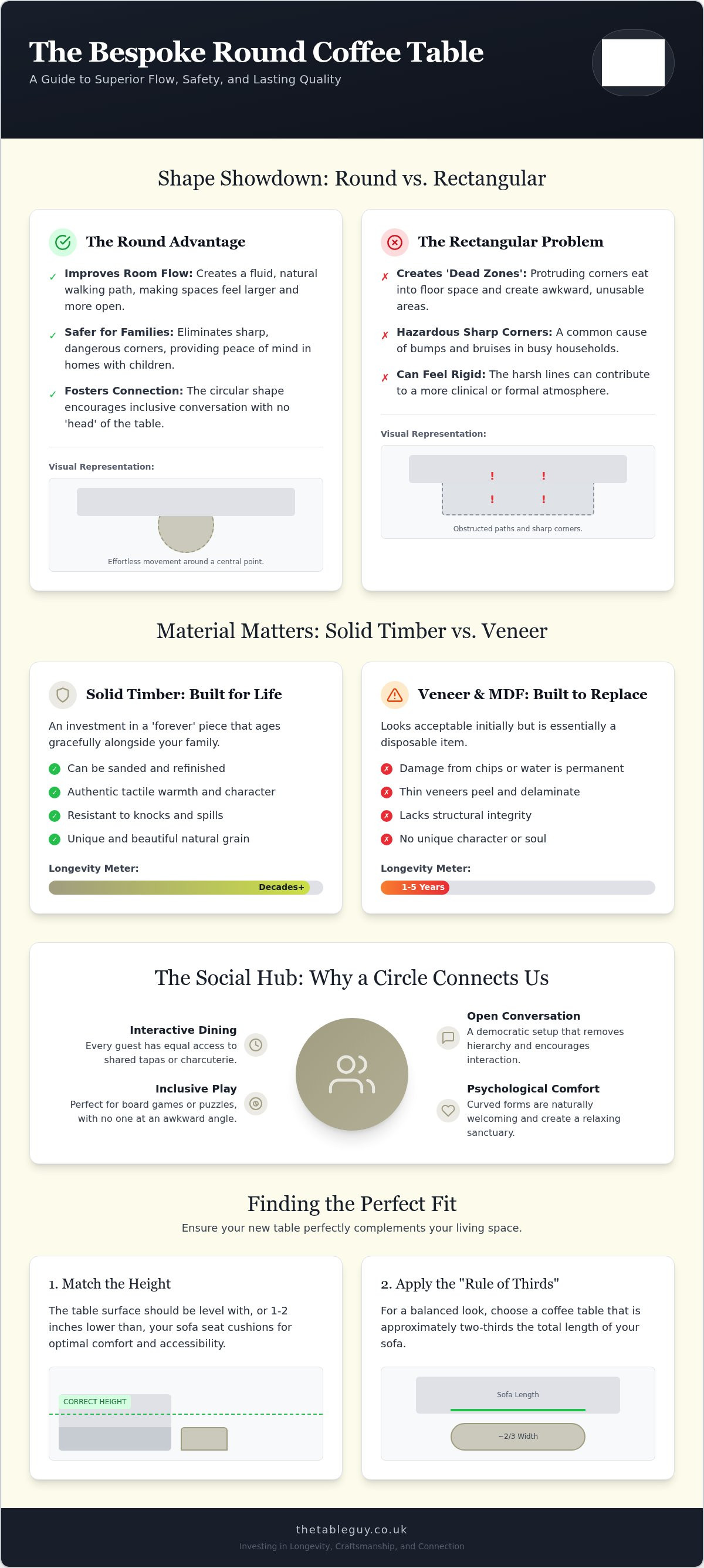
Most modern living rooms are defined by a series of rigid right angles. Between the expansive length of a sofa and the flat planes of a television unit, the environment can often feel somewhat clinical. A round coffee table serves as a vital design anchor, softening these harsh architectural lines and bringing a sense of organic harmony to the room. It acts as a visual bridge, connecting disparate pieces of furniture into a cohesive whole. For families with toddlers, the appeal is even more practical. Removing sharp corners creates a safer environment where children can play freely without the looming threat of a painful bump. It's a simple change that yields significant peace of mind.
In open-plan living spaces, the challenge is often defining specific zones without using heavy partitions. A circular centrepiece acts as a functional pivot point. It draws the eye and defines the seating area, providing a sense of structure whilst keeping the overall feel light and unencumbered. It isn't just furniture; it's the heart of the home's layout.
Improving Room Flow and Accessibility
Navigating a cluttered lounge shouldn't feel like an obstacle course. In homes with narrow walkways or compact layouts, a circular profile is often the superior choice for accessibility. Unlike rectangular alternatives that create "dead zones" in the corners, a round table allows for a fluid walking path. You can move effortlessly around the curve. This is particularly beneficial in high-traffic areas where people are constantly passing through. By eliminating the protruding corners that eat into your floor space, a round design creates the illusion of a larger, more breathable room. It provides the utility you need whilst maintaining a light, airy footprint. Move freely. Breathe easily.
The Social Geometry of the Circle
The circle is a powerful shape for fostering human connection. In a lounge setting, it creates a social hub that naturally draws people together. Because there is no "head" of the table, the hierarchy of a room is removed, encouraging more democratic and open conversation amongst guests. This layout is especially effective when paired with modular or L-shaped sofas, as it ensures everyone has an equal view of the round coffee table at the centre.
Interactive Dining: It's the favourite choice for serving shared tapas or charcuterie, as every guest can reach the centre with ease.
Inclusive Play: Whether it's a puzzle or a board game, the circular edge ensures no one is left struggling at an awkward angle.
Tactile Comfort: There is a deep psychological comfort in rounded forms. Curved edges feel approachable and welcoming, turning your living room into a sanctuary for relaxation.
Choosing a circle is about more than just aesthetics. It's about creating a space that prioritises the people within it. When you remove the sharp edges, you open up the room to more spontaneous, comfortable, and genuine interaction.
Material Matters: Comparing Solid Hardwood, Pine, and Artisan Materials
The choice of material for your round coffee table dictates more than just its appearance; it determines how the piece will age alongside your family. High-street retailers often rely on MDF topped with a paper-thin veneer. Whilst these look acceptable in a showroom, they are essentially disposable items. Once a veneer chips or water seeps into the fibreboard, the damage is permanent. Authentic, solid timber offers a completely different experience. It provides a tactile warmth that metal or plastic simply cannot match. Real wood breathes. It has a story. Most importantly, it possesses the structural integrity to be sanded down and refinished decades from now.
There is also a unique visual advantage to choosing timber for a circular design. On a rectangular table, the grain often feels predictable. On a circular surface, the natural patterns of the wood flow across the curve, creating a rhythmic beauty that acts as a piece of natural art. Achieving this requires master-level joinery. In our workshop, we ensure that the solid wood planks are perfectly aligned so that the grain remains the star of the show. Mass-produced circular tables often split at the edges because the thin veneers cannot handle the natural expansion of the wood; solid timber, however, is built to move and endure.
The Strength of Solid Oak and Hardwoods
Solid oak is the gold standard for a reason. It is incredibly dense and heavy, making it resistant to the daily knocks of a busy household. If you are looking for a "forever" piece, hardwood is the ultimate investment. It handles spills and heavy books without flinching. Because it is solid all the way through, any minor scratches can be buffed out, allowing the table to develop a rich patina over time. Browse our full collection of bespoke coffee tables to see how these premium materials come to life in our workshop.
Character and Texture: Pine and Reclaimed Wood
Not every home requires the formal weight of oak. For those seeking a rustic or industrial aesthetic, reclaimed scaffold boards and pine offer incredible character. These materials tell a story through their unique knots, nail marks, and grain variations. No two handmade tables are ever identical. Pine is also a fantastic, lightweight option that provides the soul of solid wood at a more accessible price point. We also champion sustainable alternatives like bamboo, which offers a sleek, modern finish whilst being one of the most eco-friendly materials on the planet.
Solid Oak: Unrivalled durability and a classic, premium feel.
Pine: A warmer, softer wood that is perfect for a relaxed, farmhouse vibe.
Scaffold Boards: Reclaimed timber that brings an industrial edge and unique history.
Bamboo: A sustainable, hard-wearing choice for the environmentally conscious home.
Investing in a solid round coffee table means you are stepping away from the cycle of "fast furniture." You are choosing a piece that will be the centre of your home's stories for years to come. Choose once. Choose well.
Bespoke Craftsmanship vs Mass-Produced Furniture: A Detailed Comparison
There is a distinct, tangible difference between unboxing a series of flat panels and welcoming a fully assembled, artisan-made piece into your home. Mass-market retailers thrive on volume. They prioritise immediate availability and low price points, often at the expense of character, durability, and soul. When you choose a handcrafted round coffee table, you aren't just buying a surface for your morning coffee. You are entering a partnership with a maker who cares about the grain, the joinery, and the eventual place that piece will hold in your family's life. It is the difference between a temporary filler and a permanent heirloom.
The Pitfalls of Fast Furniture
The "fast furniture" model is designed for the short term. Whilst the initial cost is lower, these pieces often prove more expensive over time because they require frequent replacement. Common issues like wobbly legs, peeling edges, and unstable frames are the hallmarks of mass-market production. There is also a significant environmental cost to consider. Mass manufacturing relies on complex global supply chains and massive shipping footprints to move flat-packs across oceans. Sadly, much of this furniture ends up in landfill within five years. It is a cycle of waste that the "slow furniture" movement actively works to break. Buy once. Buy well.
The Artisan Advantage
Choosing a UK-based workshop means supporting local heritage and a family-run business. Since 2014, we have focused on creating furniture that lasts for decades. One of the greatest benefits of the bespoke process is the ability to dictate the dimensions. High-street retailers offer fixed diameters that might be slightly too large or just a bit too small for your specific rug or sofa. We allow for custom diameters, ensuring your round coffee table is scaled perfectly to your living space. No compromises are necessary.
Every piece is hand-sanded and finished with meticulous attention to detail. This level of care is impossible to replicate in a factory setting. If you're looking for more depth on how to tailor a piece to your specific home requirements, our guide to finding a bespoke coffee table uk offers comprehensive insights into the customisation journey. You get to speak with the person actually making your furniture. It's a transparent, human-centric experience that mass-market retail simply cannot provide. We take pride in our work so that you can take pride in your home.
Finding the Perfect Fit: Sizing and Placement for Your Circular Centrepiece
Getting the scale right is often the most challenging part of interior design. A round coffee table that is too small looks lost in the room, whilst one that is too large can stifle movement and make the lounge feel cramped. To achieve a balanced look, follow the "Rule of Thirds". Your table should be roughly two-thirds the length of your sofa. This proportion ensures the centrepiece feels substantial and intentional without overpowering your seating arrangement. It is about creating harmony between the different elements of your furniture.
Ergonomics are just as vital as aesthetics. For the most comfortable experience, aim to align the table top with the height of your sofa cushions, or perhaps a few centimetres lower. This makes reaching for a cup of tea or a book feel natural rather than a chore. For the best flow, leave a gap of 30cm to 45cm between the edge of the table and the sofa. This is the "sweet spot" that provides enough legroom for guests whilst keeping the surface within easy reach. If you are struggling to find a standard size that works, you can order a custom diameter coffee table from our workshop to ensure the fit is exactly right for your specific floor plan.
If you are unsure about the diameter, try a "living room rehearsal" before you buy. Use masking tape or a large piece of flattened cardboard to mark out the footprint on your floor. It is a simple, foolproof way to visualise the scale and ensure you can still navigate the room comfortably. Leave the tape down for a day or two to see how it affects your daily routine. It's much better to adjust your measurements now than to realise the table is too big once it arrives.
Small Spaces and Nesting Options
In compact British homes, every centimetre counts. Circular shapes are inherently better for small lounges because they lack the protruding corners that "box in" a room and eat into walking paths. If you need extra surface area only occasionally, nesting tables are a brilliant solution. They tuck away neatly when not in use, preserving your floor space. Choosing a pedestal base rather than four legs can also make a small room feel larger. By exposing more of the floor and providing extra legroom, a pedestal design keeps the layout feeling light and airy.
Large Living Rooms and Statement Rounds
Grand living areas require a bold focal point to prevent the furniture from feeling scattered. For expansive seating arrangements, a "grand" diameter of 90cm or more is often necessary to anchor the space effectively. Place your round coffee table in the centre of a large area rug to define the zone and create a sense of cohesion. When it comes to styling these larger surfaces, less is often more. Use the centre of the circle for a single, impactful decorative item, such as a large ceramic vase or a curated stack of art books. This draws the eye to the natural beauty of the timber without cluttering the surface.
Investing in Longevity: The Table Guy’s Approach to Handmade Coffee Tables
Choosing a round coffee table from our workshop is an investment in a future heirloom. Since 2014, our family-run business has remained dedicated to the art of handmade furniture. We don't believe in the "disposable" culture of modern retail. Instead, we offer a "No Flat-Pack" promise. Your furniture arrives fully assembled and structurally sound, built by master craftsmen who understand the nuances of solid timber. This isn't just about convenience. It's about ensuring that every joint and surface meets our rigorous standards for longevity. We build pieces that endure.
Our finishing process is designed to protect the wood whilst highlighting its inherent character. We favour high-quality oils and waxes that penetrate deep into the fibres. Unlike the cold, plastic feel of a lacquered veneer, our finishes allow you to feel the texture of the timber. They provide a resilient barrier against spills and stains whilst allowing the wood to age gracefully. If the surface eventually shows signs of wear after years of use, it can be easily refreshed. It's a level of accountability you simply won't find with mass-produced imports.
A Family-Run Legacy of Quality
We take immense pride in selecting every piece of timber. Each plank is chosen for its unique knots and patterns, ensuring your table has a personality of its own. By using traditional joinery methods, we guarantee a level of structural integrity that outlasts any factory-line alternative. Buying from a UK maker means you have a direct line to the people who created your furniture. We are here to offer advice and support long after your table has been delivered. We value connection and craftsmanship above all else.
Customising Your Dream Table
Your home is unique. Your furniture should be too. Whether you prefer the rugged, industrial charm of reclaimed scaffold boards or the refined elegance of solid oak, we offer a variety of wood types to suit your decor. You can also select from a range of finishes, from light natural tones to deep, rich hues. This bespoke approach ensures that your new centrepiece doesn't just fit the room; it completes it. Explore our collection of handmade round coffee tables and start the journey toward a piece that truly belongs in your home.
Bring Home a Piece of Artisan History
Your living room is more than just a collection of furniture; it is the setting for your family's most cherished moments. By choosing a round coffee table, you are opting for a design that promotes effortless movement and inclusive conversation. We have seen how the strength of solid timber far outmatches the brittle nature of high-street veneers. Investing in a bespoke piece means choosing a safer environment for children and a more beautiful, tactile centrepiece for your home. Since 2014, our family-run business has focused on quality over quantity. Every item is hand-crafted in our UK workshop using solid wood construction. We don't do flat-packs. We build furniture that lasts for decades.
It is time to move beyond the limitations of mass-produced retail. You deserve a home that feels personal, authentic, and built to last. We invite you to browse our bespoke, handmade coffee tables today to find a design that fits your space perfectly. Let's work together to create an enduring heart for your living room.
Frequently Asked Questions
Is a round coffee table better for a small living room?
Yes, circular designs are generally superior for compact spaces as they eliminate protruding corners that can make a room feel boxed in. Because you can navigate around the curve easily, it creates a more fluid walking path in narrow layouts. This lack of sharp angles also provides the illusion of more floor space, keeping your lounge feeling light and airy whilst maintaining full functionality.
What is the ideal height for a round coffee table?
The ideal height for your centrepiece is typically level with or slightly lower than your sofa cushions. Most standard designs sit between 40cm and 45cm high, which allows for ergonomic comfort when reaching for a drink or book. Aligning the surface with your seating ensures the room feels balanced and prevents the table from dominating the visual space or feeling awkwardly tall.
How much space should be between a sofa and a round coffee table?
You should aim for a gap of approximately 30cm to 45cm between the edge of your sofa and the table. This specific distance provides enough legroom for guests to sit comfortably whilst ensuring the surface remains within easy reach. If you have a particularly narrow room, staying closer to the 30cm mark can help preserve vital walkway space around the rest of the furniture.
Are round coffee tables safer for children than rectangular ones?
Round designs are significantly safer for households with young children because they lack the sharp, pointed corners found on rectangular or square alternatives. This organic shape reduces the risk of painful bumps and injuries during play. It offers parents peace of mind, allowing children to move freely around the living room without the constant worry of an accidental collision with a harsh edge.
Can I customise the size of my coffee table at The Table Guy?
We specialise in bespoke creations, so you can absolutely customise the diameter and height of your round coffee table to suit your specific needs. Since every piece is made-to-order in our UK workshop, we aren't restricted by the standard sizes found in mass-market retail. Whether you need a small nesting set or a grand statement piece, we can tailor the dimensions to fit your floor plan perfectly.
How do I maintain a solid wood round coffee table?
Maintaining solid wood is straightforward and involves regular dusting with a soft, dry cloth and the consistent use of coasters for drinks. Avoid harsh chemical cleaners that can strip the natural oils. Depending on the finish you choose, we recommend a light application of furniture wax or oil every twelve to eighteen months. This simple care routine protects the timber and helps the wood develop a beautiful, deep patina over time.
What wood is best for a durable coffee table?
Solid oak is the premier choice for a durable, high-use round coffee table due to its incredible density and resistance to daily wear. It handles knocks and spills far better than softer timbers or veneers. Whilst pine and reclaimed scaffold boards offer wonderful character and a rustic aesthetic, oak remains the ultimate investment for those seeking a forever piece that will survive decades of family life.
Do round coffee tables work with L-shaped sofas?
Circular designs work exceptionally well with L-shaped or modular sofas because they fit neatly into the nook created by the corner section. Unlike rectangular tables, which can leave certain seats feeling too far away or blocked in, the curved edge ensures every person has equal access to the surface. It facilitates better eye contact and creates a more inclusive social environment for everyone seated on the sofa.
Comments