
Avoiding Flat Pack Furniture Problems: A Practical Guide
Updated: 2 days ago
What if the most frustrating flat-pack problems could be prevented before you pick up a screwdriver? Unclear instructions, lookalike fixings and panels that don’t line up can turn a promising piece of furniture into a wobbly source of rework. Before buying, check the dimensions, intended use and assembly requirements. During assembly, identify each part and follow the instructions in order. These practical checks make avoiding flat pack furniture problems more manageable.
This guide covers what to check before buying, how to prepare parts and your workspace, and how to assemble furniture without avoidable damage. It also explains when a careful adjustment may solve a fault and when a damaged part or poor fit calls for another solution. If standard dimensions or configurations don’t suit your space, made-to-order furniture can be designed around the room and how you plan to use it. The Table Guy makes wooden and metal furniture to order, including dining tables, coffee tables and storage furniture.
Table of Contents
Avoiding flat pack furniture problems starts with knowing what can go wrong
Many flat-pack frustrations can be avoided with preparation and patient assembly. A wobbly frame, uneven doors, a stiff drawer or a loose joint doesn’t always mean the furniture is beyond repair. The cause may be a panel fitted the wrong way round, or fixings tightened before the frame was aligned. Check the parts and instructions before deciding what to do. A simple assembly error is different from a cracked panel or a missing component.
This guide focuses on assembly, fit and everyday use. It cannot cover every possible product fault. A cracked panel or a component missing from the box needs a different response from a correctable assembly mistake. For a broader overview of flat-pack furniture, its materials and purpose, see Understanding Ready-to-Assemble Furniture.
Which flat-pack problems are most common?
Fitting a panel the wrong way round can leave its finished surface facing inwards or put its pre-drilled holes on the wrong side. Tightening fixings unevenly can pull the frame out of square, leaving doors misaligned or the whole unit rocking. Before correcting anything, check whether the problem is the panel’s orientation, the alignment of the frame or visible damage.
Wobble or loose joints: check that the frame is level and the fixings are seated as the instructions show.
Uneven doors or stiff drawers: check whether the frame is out of square or a component is fitted in the wrong orientation.
Cracks, damaged edges or missing fixings: don’t treat these as alignment issues. Identify exactly what is affected before continuing.
Set aside damaged or missing components rather than improvising a substitute. A part that is damaged or incorrectly supplied needs a different response from a panel that has simply been assembled backwards.
Why can small assembly errors become frustrating?
Flat-pack assembly is a sequence. Each panel and fixing affects where the next part sits. One misplaced fixing can shift a side panel and leave the holes out of line when it’s time to fit a shelf or back panel. Forcing the pieces together can chip an edge, widen a pre-drilled hole or crack the material around it. If resistance feels unexpected, stop and check the part’s orientation and the relevant diagram.
Careful checks at the start can prevent avoidable corrections later. Compare the parts with the diagrams and check that each panel’s holes and finished edges face the right direction. If a component is damaged or doesn’t match the instructions, pause rather than tightening it into place. This helps distinguish a mistake you can correct from a product fault that needs a different remedy.
How to prevent flat pack furniture problems during assembly
A steady process is more reliable than rushing to get the unit standing. Keep the supplied instructions beside you, identify each component before fitting it, and follow the steps in order. Shelves, rails or a back panel may depend on earlier parts being positioned correctly. Taking time to check each step makes avoiding flat pack furniture problems more achievable, even if you haven’t assembled this type of furniture before.
Prepare the parts, instructions and workspace
Choose a clear, level area with enough room to lay out panels without stacking them precariously. Protect finished surfaces with the packaging or a clean, soft covering, and keep small fixings away from children and pets. Compare the parts with the manual, then sort screws, dowels and other fixings by type. Don’t assume two similar-looking pieces are interchangeable.
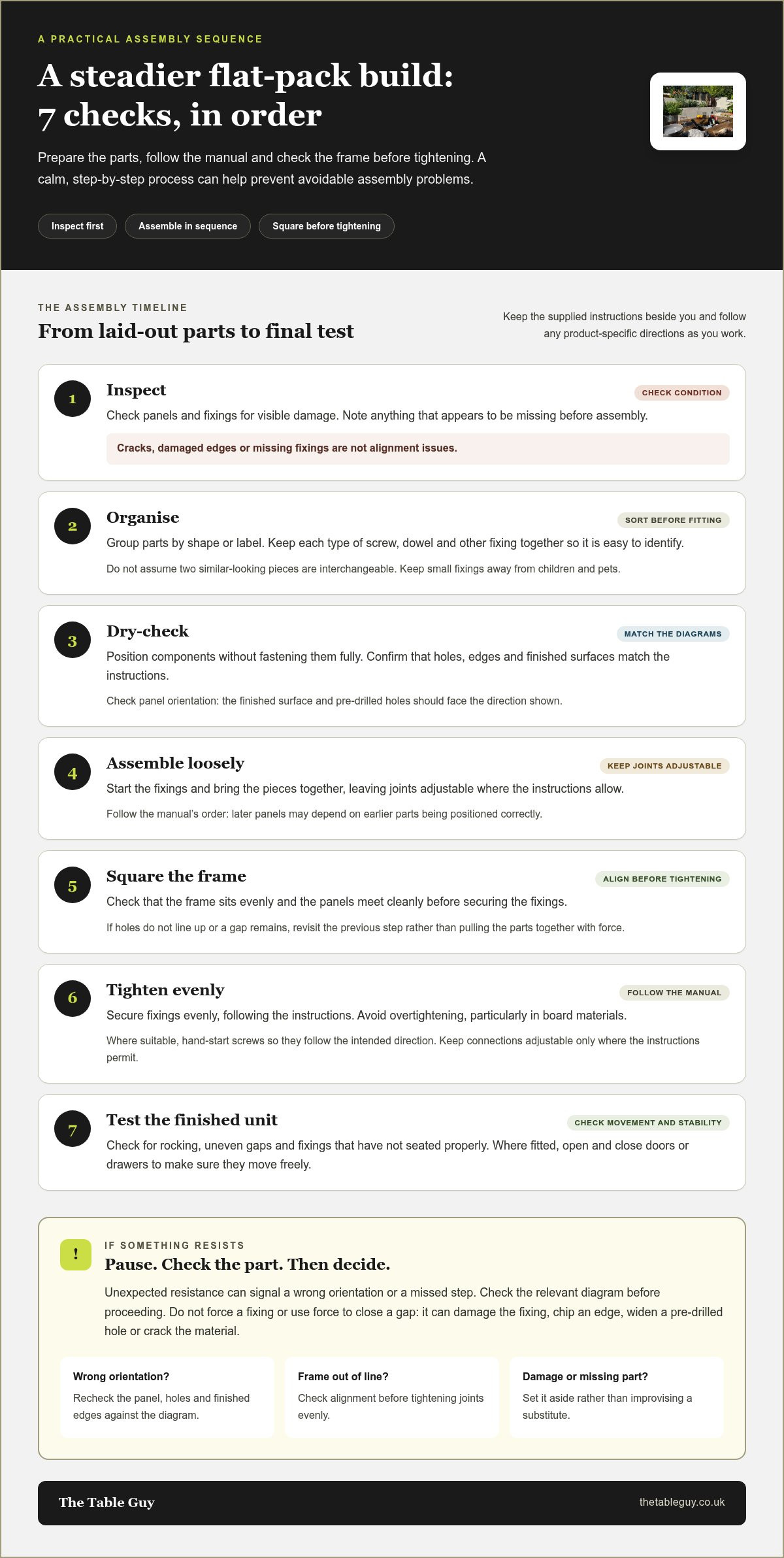
Use this sequence as you work, while following any specific directions in the product instructions:
Inspect: Check panels and fixings for visible damage. Note anything that appears to be missing before assembly.
Organise: Group parts by shape or label, and keep each type of fixing together so it’s easy to identify.
Dry-check: Position components without fastening them fully. Confirm that holes, edges and finished surfaces match the diagrams.
Assemble loosely: Start the fixings and bring the pieces together, leaving joints adjustable where the instructions allow.
Square: Check that the frame sits evenly and the panels meet cleanly before tightening.
Tighten: Secure fixings evenly, following the manual. Avoid overtightening, particularly in board materials.
Test: Check stability and, where fitted, open and close doors or drawers to make sure they move freely.
Assemble in sequence without forcing fixings
Follow the manual’s order, even if another step looks quicker. A later panel may help hold the structure in alignment, so tightening every fixing too early can pull the joints out of position. Where suitable, hand-start screws so they follow the intended direction. If a cam lock, screw or panel resists, stop and check its orientation and the relevant diagram. Forcing it can damage the fixing or surrounding material.
Keep connections adjustable only where the instructions permit, then align the frame before tightening each joint evenly. Don’t use force to hide a gap or pull misaligned holes together. If the parts won’t meet with gentle pressure, revisit the previous step. Correcting a small mistake now is usually simpler than dismantling a completed section.
Before you finish, check for rocking, uneven gaps and fixings that haven’t seated properly. If standard sizes don’t suit your room, The Table Guy’s made-to-order wooden and metal furniture can be tailored to specific dimensions and intended use.
Should you fix, reassemble or replace problematic flat-pack furniture?
A visible fault doesn’t automatically mean the furniture needs replacing, but repeating the same fix without checking the cause is unlikely to help. Consider the condition of the components, whether the instructions support a correction, and whether the finished piece suits its intended use. A frame that’s slightly out of alignment is a different problem from a cracked panel or a stripped fixing hole.
Use this comparison to choose a practical next step. If parts are missing, damaged or incorrectly supplied, follow the product instructions or seller guidance rather than improvising a substitute.
When is careful reassembly or adjustment worth trying?
Try a correction only if the components appear intact and the instructions support it. If the frame looks skewed, loosen the relevant fixings enough to reposition the parts, check that the edges meet evenly, then tighten them again. Don’t drill new holes, wedge joints or use an improvised repair to disguise damage. If a panel is cracked or a fixing no longer holds, stop and follow product-specific guidance.
When might a different furniture solution suit better?
Sometimes assembly isn’t the issue. A piece can be correctly built and still take up too much room, offer too little storage or fail to suit how the household uses it. If those compromises persist, made-to-order furniture can be tailored to the room’s dimensions, chosen materials and intended function. This is a different decision from correcting an assembly error. It’s about finding a better fit for everyday life.
If the underlying issue is seating capacity, an extendable dining table may be worth considering. This guide to choosing an extendable dining table can help you think through the space and flexibility your household needs. To avoid flat pack furniture problems in the long term, assess your next choice by fit, condition and intended use, not just by the frustration of one difficult assembly.
A pre-purchase checklist for avoiding flat pack furniture problems
A few checks before buying can help prevent the disappointment of furniture that doesn’t fit, function or feel right at home. Don’t rely on a product photo or a single width measurement. Check the listed dimensions, intended use, materials, assembly requirements and route into the room. For bedroom furniture where frame stability and proper fit are crucial, reviewing specifications with established retailers such as Belfast Bed Superstore can provide clear expectations regarding construction and dimensions before ordering. Then compare those details with the space and routines the furniture needs to serve.
Will the furniture fit the room and the route into it?
Measure the planned footprint, then mark it out on the floor with tape or paper. Allow room to open doors and drawers fully, pull out chairs or extend a table, and move comfortably around it. Measure the entrance, hallway and any turns, too. Where available, compare these measurements with the packaged dimensions. Accurate measuring means checking access as well as the space where the furniture will stand.
Room and placement: Record the width, depth and height available. Include skirting boards and nearby furniture that could affect how closely the piece sits to a wall.
Clearance for use: Allow space for drawers, cupboard doors, table extensions and everyday movement, not just the furniture’s footprint when closed.
Access route: Measure doorways, hallways and tight turns. Compare them with the packaged or assembled dimensions stated by the seller.
Floor and surroundings: Look for uneven flooring and obstacles that could affect placement or stability.
Does the design suit your household and routine?
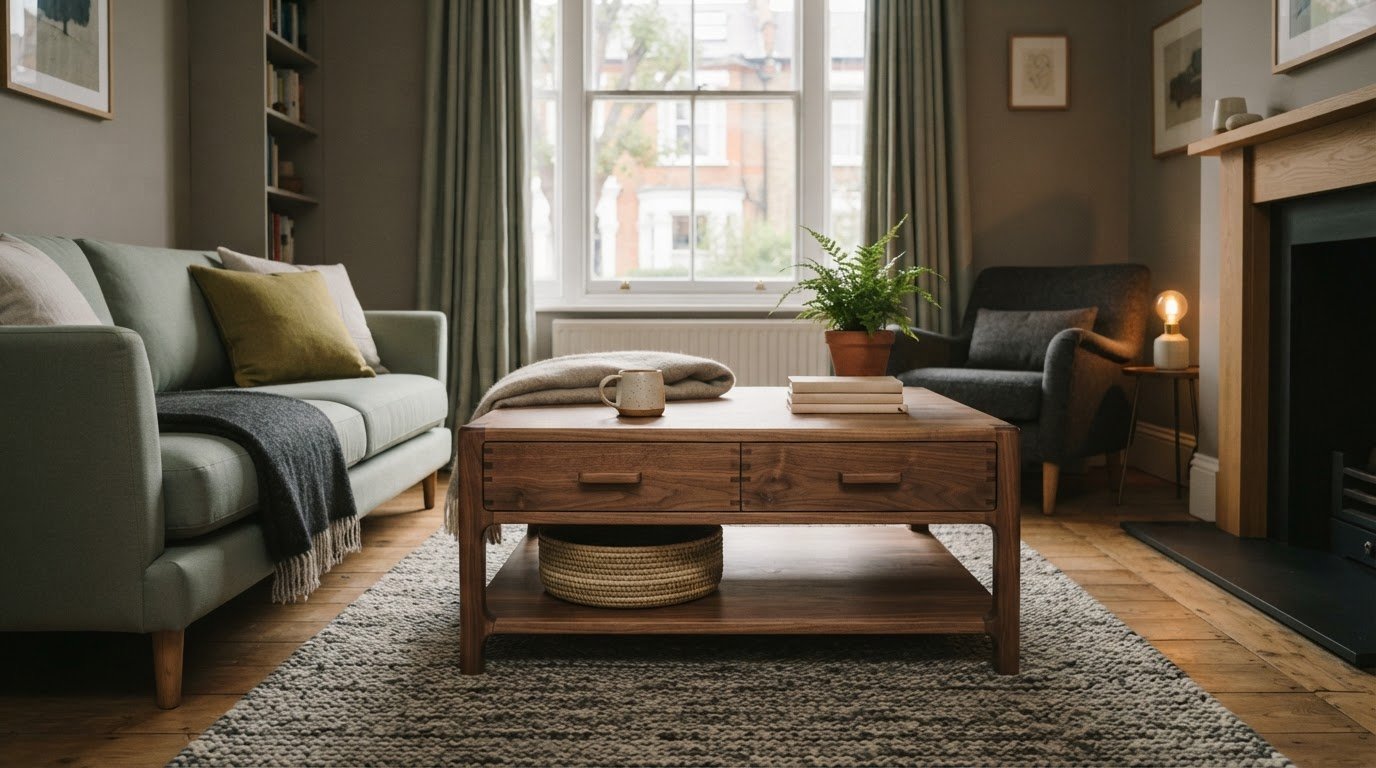
Think about who’ll use the furniture, how often and what it needs to do. A compact table may suit daily meals but feel restrictive when guests visit. A storage unit may look right but have a layout that doesn’t work for the things you need to store. Compare the stated dimensions and features with the tasks you do at home. If you’re considering a tailored coffee table, explore this bespoke coffee table guide for ideas on matching a design to your living space.
Intended use: Decide whether the piece is for daily meals, occasional entertaining, storage, display or another regular task.
Materials and care: Read the material description and care guidance. Consider whether the finish and upkeep suit how your household will use the furniture.
Assembly confidence: Review the instructions and component information before purchase. Consider whether you have the space, tools and time to follow the assembly steps.
If standard sizes or configurations don’t suit your room, consider made-to-order furniture for your space. The Table Guy makes bespoke furniture with dimensions and materials suited to specific requirements.
Bespoke furniture: the answer to flat pack problems
Not every furniture problem is an assembly problem. If a panel is fitted incorrectly, a careful correction may help. But if a piece is assembled properly and still crowds the room, lacks useful storage or doesn’t work for your household, repeating the assembly won’t fix the underlying mismatch. Consider furniture designed around your requirements rather than adapting your routine to standard dimensions or a fixed configuration.
What can a bespoke design change?
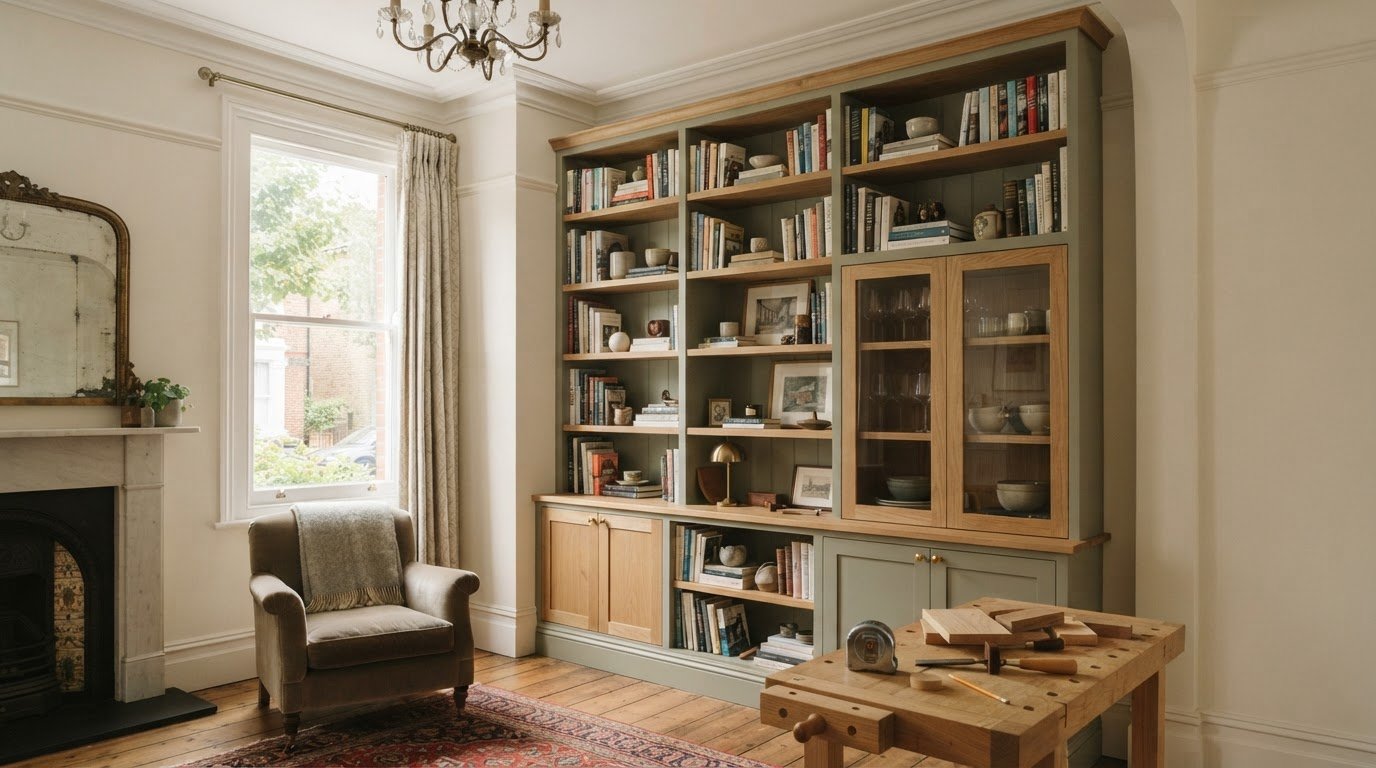
Made-to-order furniture lets you consider the available space, materials and intended use together. A dining table, coffee table, sideboard or shelving can be designed for your requirements rather than chosen solely from a standard size or layout. This can help address a persistent compromise, such as a table that leaves too little room to move or storage that doesn’t suit what you need close at hand.
Bespoke furniture is made to suit specific requirements. It won’t remove every practical constraint, but the design can start with the room and how you plan to use the piece. A clear brief helps set priorities before settling on a design.
How to move from frustration to a considered furniture choice
Before deciding what should replace an unsuitable piece, describe the problem plainly. Is it too wide for the room, awkward to use, short on storage or unable to accommodate the household at mealtimes? Separate essential functions from preferences, then compare those needs with the practical fit of standard furniture. If the same compromise keeps appearing, a tailored design may offer a better fit.
Note the room constraints: Record the usable space and any access or movement needs that affect where furniture can go.
List everyday functions: Consider what the furniture must hold, support or accommodate during a typical day.
Identify the recurring compromise: Be specific about what hasn’t worked, rather than focusing only on the frustration of assembly.
Compare the options: Decide whether a standard size and configuration meet those needs, or whether made-to-order dimensions and materials could work better.
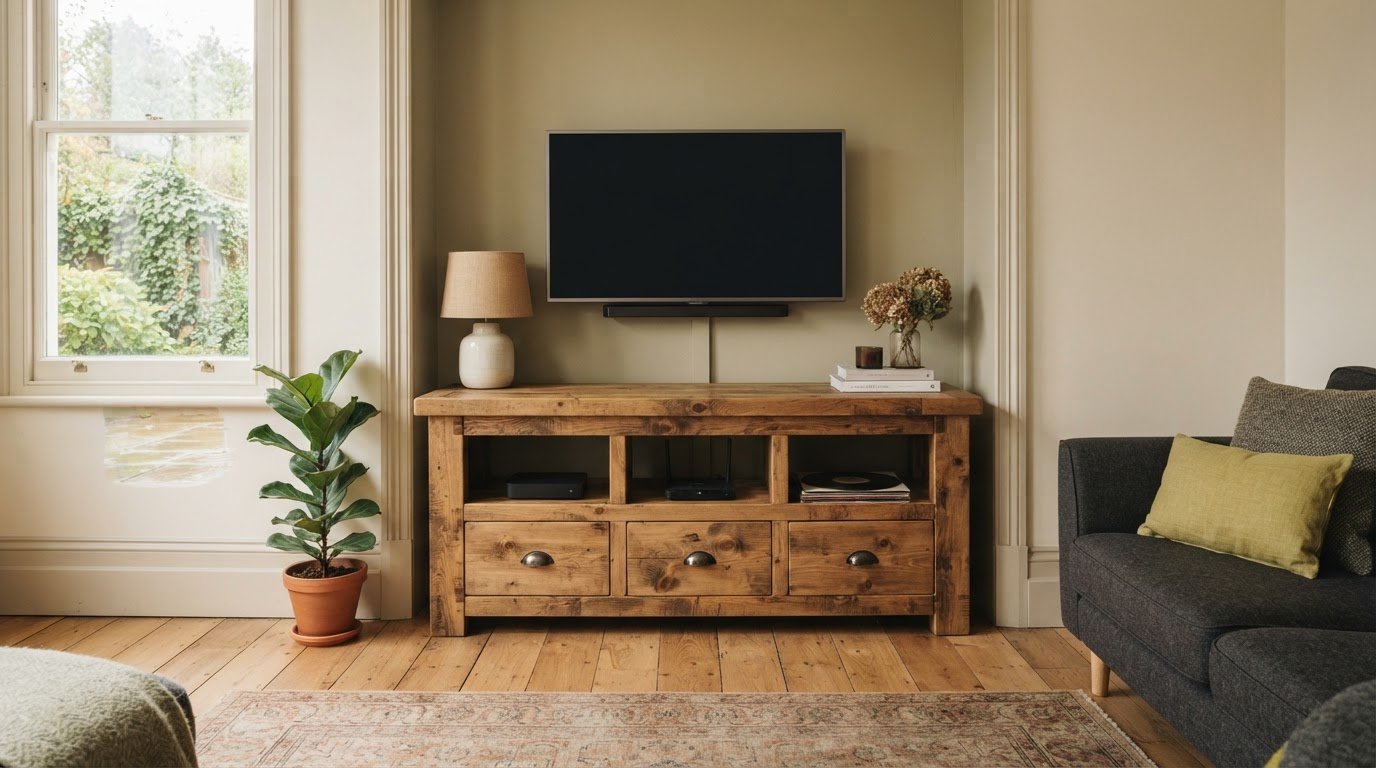
The Table Guy makes wooden and metal furniture to order in its UK workshop. Its range includes dining tables, coffee tables, sideboards, TV units and shelving. A considered design can bring together the room’s proportions and the role the furniture needs to play, whether that means a place to gather, a useful surface or storage that belongs naturally in the space.
If standard furniture continues to leave you making the same compromises, explore made-to-order furniture from The Table Guy and consider a piece shaped around your home and everyday use.
Choose furniture around the life you live
Your next piece of furniture should suit the room and make everyday routines easier. Before choosing, write down what matters most: the space available, how the piece will be used and what you don’t want to compromise on. That brief can help you compare standard options with a design shaped around your needs.
Use a frustrating assembly experience to clarify what you want from your next piece. Consider the fit, function and materials that matter in daily use. Those are more useful starting points for avoiding flat pack furniture problems and choosing furniture that works for your household.
If standard dimensions or configurations still feel like a compromise, take a look at made-to-order furniture from The Table Guy. Explore the possibilities and find a considered direction for your space.
Frequently Asked Questions
Can humidity cause flat-pack furniture to swell or become unstable?
Yes, prolonged exposure to damp or changing humidity can affect some board materials, causing swelling, especially around exposed edges. Kitchens, bathrooms and rooms with condensation may pose a greater risk than a dry, well-ventilated space. To avoid flat pack furniture problems, follow the care guidance, wipe spills promptly and avoid placing furniture where it stays damp. If a panel has swollen or distorted, tightening its fixings won’t necessarily restore its shape.
Should flat-pack furniture be fixed to the wall?
Fix it to the wall if the instructions recommend it, particularly if it’s a tall or top-heavy storage unit. Use fixings suitable for both the furniture and wall type, and take care to avoid concealed pipes or cables. Don’t assume the fittings supplied will suit every wall. If the unit needs to be moved later, detach it from the wall first and follow the instructions before repositioning it.
Can flat-pack furniture be moved after it has been assembled?
Sometimes, but moving a fully assembled piece can twist its frame and strain its joints. Empty it first, remove loose shelves and drawers, and check the instructions for guidance on dismantling or moving it. For a short move across the room, lift rather than drag, with another person helping if the item is awkward to handle. Once it’s in place, check that it stands securely and that doors or drawers still work properly.
What should I do if a flat-pack furniture part is missing?
Pause assembly and check the parts list, packaging folds and smaller bags before deciding a component is missing. Note the part’s name or reference number in the instructions, then follow the seller’s guidance to report what’s absent. Keep the packaging and purchase details to hand. Avoid substituting a similar-looking screw or fitting. A small difference in length or type could prevent the joint from holding as intended.
Why does my flat-pack furniture wobble on an apparently level floor?
A floor can look level but still have a slight dip or raised area beneath one corner. A frame assembled under tension can also rock. Remove items from the furniture, check that each foot is resting firmly and inspect the joints for movement. If the instructions allow adjustable feet, use them to stabilise the unit. Don’t force a twist into the frame or leave a tall or heavily loaded piece unstable.
Can I use wood glue on flat-pack furniture?
Only use wood glue if the product instructions specifically recommend it for that joint. Some flat-pack connections are designed to come apart, and adhesive can make later dismantling difficult or damage the material during correction. Glue also won’t reliably fix a cracked panel or a stripped fixing hole. If a joint feels loose, check the assembly guidance first and identify whether the parts or fixings are damaged before trying an adhesive.
Comments