
Bespoke rustic dining tables for farmhouse style and a better fit
A farmhouse table is made for everyday gatherings: typically a solid, practical design with natural materials and a relaxed, lived-in character. The right bespoke rustic dining table in the UK should suit both that style and the room it will stand in, not just look the part.
That welcoming, timeworn look has lasting appeal, but “farmhouse” can mean different things in different homes. Rustic, industrial and modern designs each create a distinct feel, and the table’s proportions matter as much as its finish.
Here, you’ll learn what defines a farmhouse table, how to tell these styles apart and how to plan space for chairs and comfortable movement. You’ll also find practical points to consider when choosing a maker, from the wood and finish to the way a table is made to fit your home.
Table of Contents
1. Bespoke farmhouse table styles and finishes
Farmhouse character comes from honest materials, practical proportions and details that feel at home in daily use. Reclaimed pine, for example, brings visible grain, knots and marks to the surface, while a simple trestle base gives the design a traditional profile. A 42-inch round farmhouse table shows how the style can also suit a smaller dining area.
Plan dimensions around the room and the way you dine. Measure the available floor space, include chair positions, then settle on a length, width and height that feel comfortable. As a useful place-setting guide, allow 60 cm of table width per person. Bespoke sizing can make a stunning farmhouse design work in an awkward nook or alongside existing furniture, without choosing a table that dominates the room.
Finish affects both appearance and upkeep. A clear or lightly coloured finish keeps the grain prominent; a darker stain gives pine a richer tone, while a painted base can contrast with a natural wood surface. Brushed or distressed textures bring out the grain and character. Compare finish samples with your flooring and in natural light, as colour can look different across materials and lighting.
Oiled wood has a tactile, low-sheen look, but it needs care. It may need regular polishing and periodic oil reapplication. Follow the maker’s care instructions and wipe spills promptly to help protect the surface. Choose a finish for how you’ll use the table, not just how it looks when delivered.
Bespoke dining tables are ready in 12 weeks and delivered and assembled by the workshop team. Delivery costs depend on factors such as distance, access and the delivery arrangement, so get the total in writing before ordering. Before paying a deposit, check the agreed dimensions, finish, payment schedule, return terms and warranty coverage in the order paperwork, especially where the table is made to your specifications.
2. Rustic, industrial and modern table styles
Rustic style celebrates visible timber grain, natural variation and a relaxed, lived-in feel. Industrial designs pair wood with metal details for stronger contrast, which can suit a kitchen with exposed brick or simple fittings. Modern tables tend to have cleaner lines and restrained details. Compare these features in the room, not just in product photos.
Vintage and shabby chic designs bring a softer, timeworn character. Distressed edges, muted paint and an aged-looking surface can make a table feel established without matching every other piece of furniture. For example, a round shabby chic pub table has a different presence from a long farmhouse design. Choose one defining detail, such as a worn finish, and keep surrounding colours simple.
Oak and pine are both suitable timber choices for rustic dining tables. Oak has a pronounced grain and substantial appearance, while pine offers a softer, more relaxed look. Either can work with different finishes, so choose based on the grain, tone and texture you want to see every day. Oak tables can range from traditional, sturdy profiles to pared-back designs, depending on the base and surface treatment.
Shape and dimensions affect how a table feels in use. A rectangular design creates a clear central line in a kitchen; a round top can soften a compact dining space. Bespoke sizing lets the proportions suit the room, while the base can change the overall style. Decide whether you want timber to dominate or metal to add contrast before settling on a shape.
Start with the room’s existing materials and the atmosphere you want. Pair an industrial table with metal light fittings, or balance a distressed finish with smooth cabinetry. Then compare the grain, base, edge profile and finish as a whole. A rustic design feels cohesive when its details suit the home rather than compete for attention.
3. Space around the table for chairs and movement
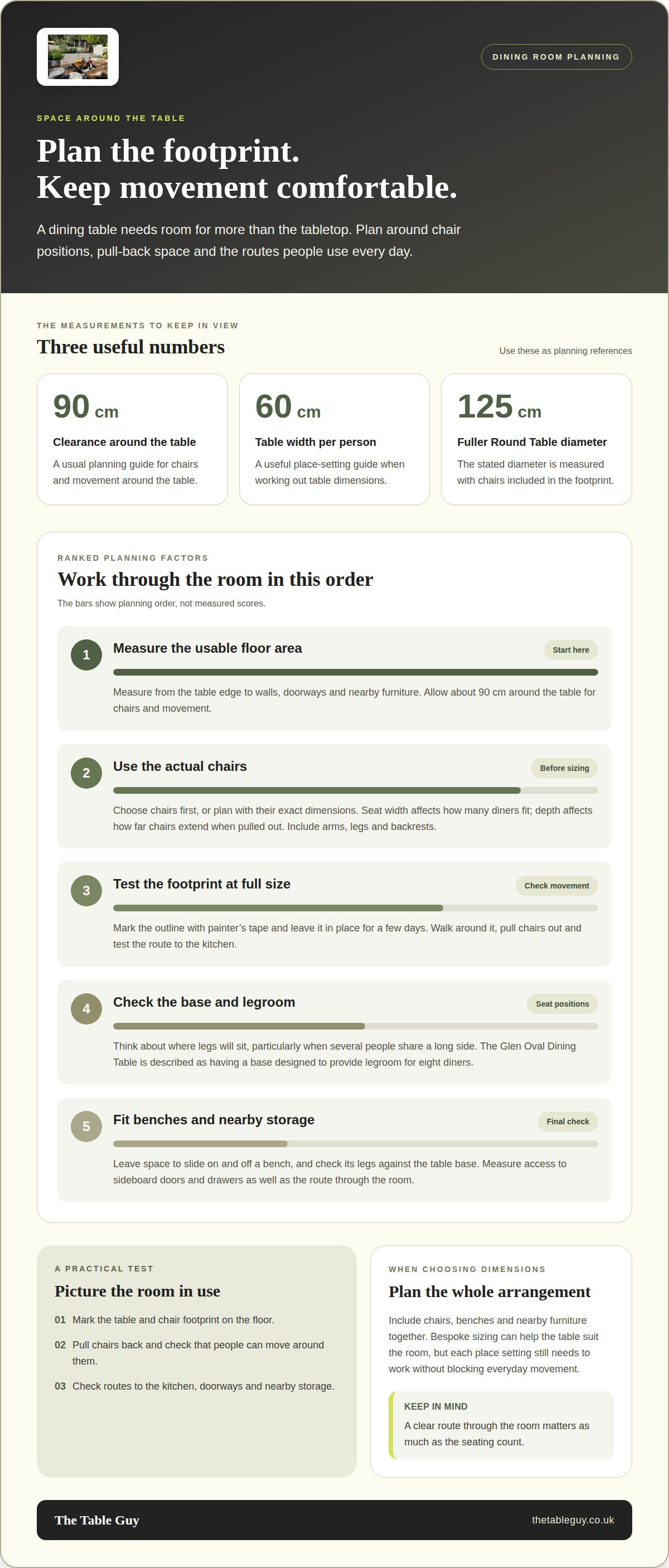
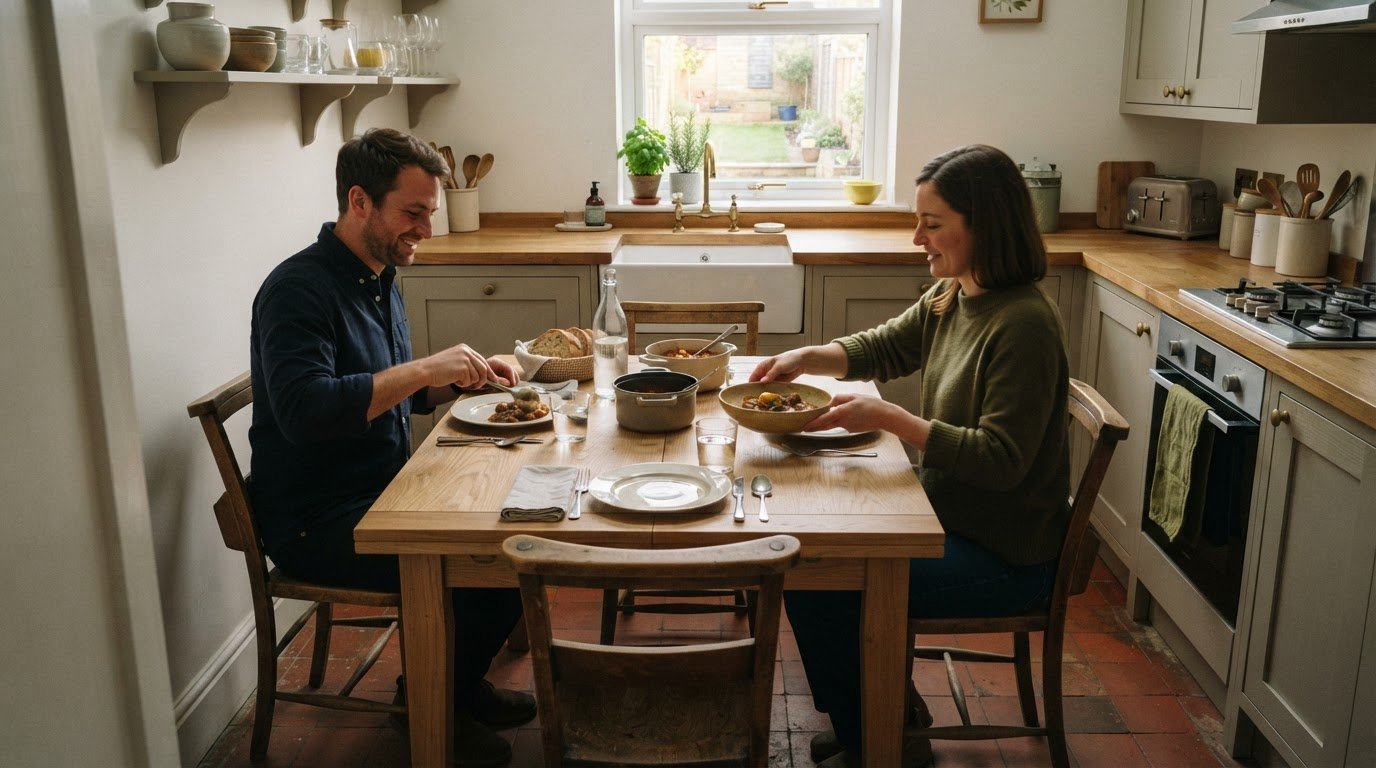
Start with the room’s usable floor area, not the tabletop alone. A dining table should usually have 90 cm of clearance around it for chairs and movement. Measure from the table edge to walls, doorways and nearby furniture, then consider the space needed to pull each chair back. A clear route through the room matters as much as the seating count.
Choose your chairs before commissioning a table, or use their exact dimensions when planning. Seat width affects how many diners fit along each side; chair depth determines how far they extend when pulled out. For example, broad farmhouse chairs may need more room than compact, armless designs. Include arms, legs and backrests in your measurements.
Make a full-size outline with painter’s tape and leave it in place for a few days. Walk around it, pull chairs out and test the route to the kitchen. A Fuller Round Table has a diameter of 125 cm when measured with chairs, a useful reminder to account for seating in the footprint. Tape makes that space easier to picture.
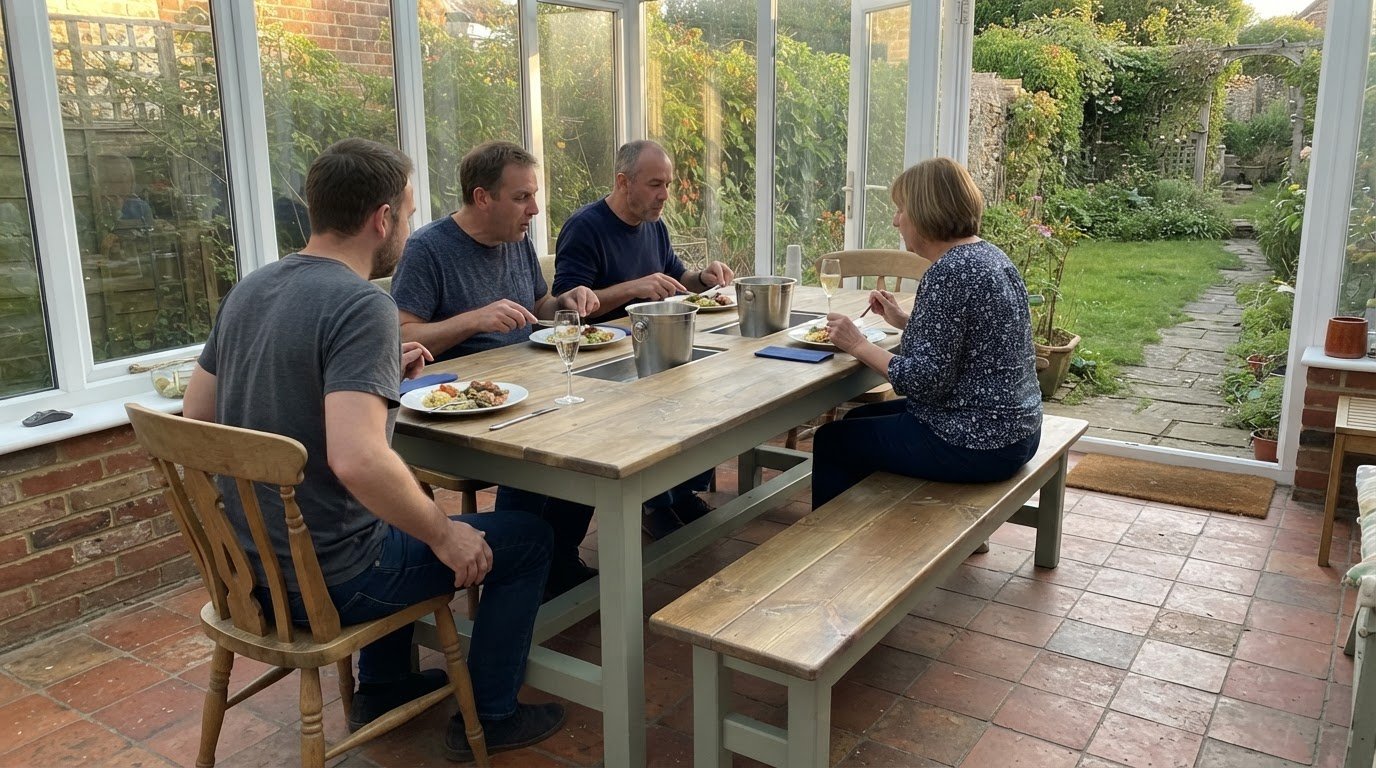
Benches can make one side of a classic farmhouse table feel less crowded, but leave enough space to slide in and out. Compare the bench length with the table edge, and check that its legs won’t clash with the table base. If you’re matching chairs and storage, such as a sideboard, also measure access to doors and drawers.
Base design affects comfort as well as appearance. The Glen Oval Dining Table has a base designed to provide leg room for eight diners. Use this example to consider where legs will sit, especially if several people share a long side. Before finalising custom dimensions, map out the chairs, benches and nearby storage together. A well-planned arrangement should leave each place setting usable without blocking everyday movement.
4. Finding a bespoke dining table maker
Start with the maker’s photos of completed tables, not mood-board images. Look for close-ups of joints, edges, timber grain and the underside, as well as full-room pictures that show scale. A portfolio with varied shapes and finishes helps you judge whether the maker can turn your preferred rustic character into a practical design.
Ask how the wood is sourced and what the finish involves. Responsibly sourced natural wood, such as FSC-certified oak or pine, is a useful point to discuss. Compare samples in your home’s light: warm oak may look different beside pale flooring than against dark cabinetry. Check how to care for the chosen surface, too.
When comparing makers and reviews, use the same brief for each: dimensions, timber, finish, base, delivery arrangements and written terms. Look for specific comments about communication, workmanship and how closely the finished table matched the order. Compare those comments with photos of similar work, rather than relying on a star rating alone.
How much does a bespoke rustic dining table cost in the UK? The price depends on the wood, dimensions, shape, finish, base and any extension; delivery arrangements may also affect the total. Ask for a written quote that clearly describes the agreed design and related charges, so you can compare like with like.
Before ordering, make sure the specification records the measurements, finish, timber and delivery plan. Read the payment stages, deposit terms, cancellation and returns conditions, and warranty coverage. For example, a reclaimed-pine top with a painted base needs a clear description of both surfaces. Keep the final specification with your order confirmation.
A beautiful table should also be durable for the way your household uses it. Share practical details, such as frequent family meals or regular entertaining, so the maker can discuss suitable materials and finishes. Bring room and chair measurements, along with a photo of the kitchen, to your design conversation. This gives the craftsperson useful context for shaping the final piece.
The Table Guy: Prosecco Dining Tables
The Table Guy makes bespoke farmhouse tables, alongside Prosecco Dining Tables and Bamboo & Hardwood Tables. If you’re drawn to farmhouse character, compare it with the look of Scaffold Board & Pine Tables. Each material has its own grain, texture and visual weight, all of which help shape the room’s feel.
Consider the table’s role before choosing: a warm timber surface can anchor everyday meals, while a Prosecco design makes a different style statement. Your room measurements, preferred finish and seating arrangement can guide your choice. Share the dimensions and details that matter when discussing a made-to-order table with The Table Guy.
For a dining table shaped around your home and style, contact The Table Guy.
Shape your dining space around a table made for you
Turn your ideas into a clear design brief. Note the room’s proportions, the seating you plan to use, and the timber and finish that feel right at home. These choices give a maker a practical starting point for creating a table that feels personal, not generic.
If you’re considering a bespoke rustic dining table in the UK, The Table Guy makes Farmhouse Tables, Prosecco Dining Tables and Bamboo & Hardwood Tables to order. Consider which style best reflects your home, then share your preferences and requirements to discuss a design. A well-chosen dining table can become the setting for everyday meals and memorable gatherings.
Contact The Table Guy about your table and take the next step towards a design that feels at home in your space.
Frequently Asked Questions
What is a farmhouse table?
A farmhouse table is a dining table with a practical, often robust form and an informal country-house character. Its identity comes from its proportions and materials rather than a fixed blueprint: a plank-style top, trestle or simple legs, and visible wood grain can all contribute. When choosing a bespoke rustic dining table in the UK, decide whether you want those traditional details softened or kept prominent.
Which UK makers build bespoke rustic dining tables?
The Table Guy makes bespoke Farmhouse Tables, Prosecco Dining Tables and Bamboo & Hardwood Tables in the UK. Each is handmade to order, so start with a brief describing your room, intended use and preferred material. This helps you decide whether a farmhouse design or a different timber style is the better fit, rather than choosing on appearance alone.
What table sizes and seating capacities are available?
Sizes and seating capacities depend on the design, but examples show how broad the choices can be. A Bridge Table is 3M long and seats twelve diners; a Fold Table is 130 cm long and extends to 220 cm, with a width of 80 cm and height of 75 cm. Treat these as examples, then match table size to diners, chair footprint and room access.
How do UK furniture makers customise table shape, legs and finish?
A maker can tailor a tabletop’s outline, dimensions, base and finish to suit its intended room. The Table Guy makes bespoke tables with adjustments to size, shape and finish, and its range includes industrial-style tables with metal legs. Describe the look you want, provide room measurements and note practical needs, such as seating and access. Stain and colour choices can be decided after placing an order.
How do I care for and maintain a rustic solid wood dining table?
Care depends on the finish, so follow the maker’s instructions for your specific table rather than applying a generic product. For everyday upkeep, clear crumbs with a soft cloth and wipe spills promptly; use coasters or mats to reduce marks from drinks and hot dishes. Avoid abrasive pads, which can scratch the surface. Check periodically for loose fittings and tighten them with suitable tools.
Comments