
Commercial Restaurant Tables for UK Hospitality Venues
Indoor and outdoor tables may need different materials and finishes to suit their settings. Choose commercial restaurant tables in the UK according to where they will stand and the conditions they will face. For outdoor areas, select materials and finishes suited to exposure to the elements. For indoor dining, prioritise the room layout, style and how guests will use each table. Start with the setting, then narrow down the shape and size.
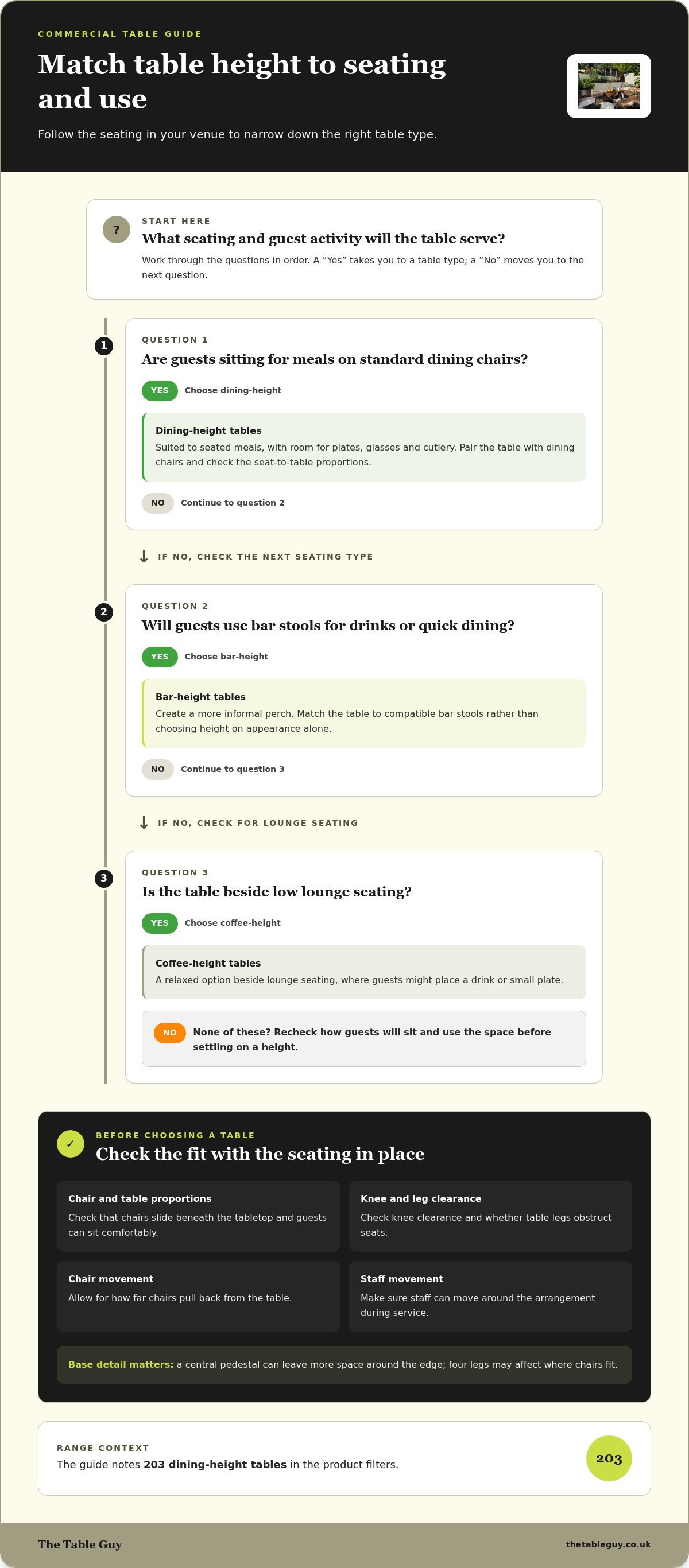
Appearance matters, but a table also needs to work around seating, service routes and the space available. Height matters too: dining tables suit seated meals, while bar-height tables create a different feel and coffee tables serve a more relaxed purpose.
This guide compares indoor and outdoor use, traditional, modern, industrial and rustic styles, and the practical differences between dining, bar and coffee-table heights. You’ll also find guidance on choosing shapes and dimensions for restaurant and bar layouts, so you can make a considered choice for your venue.
Table of Contents
Traditional, modern, industrial and rustic styles
Choose a style that supports your venue’s character, then compare materials, colour, height and base design. If you are considering new, refurbished or second-hand tables, weigh their condition and suitability for your layout against the appeal of a fresh, consistent collection.
Traditional and contemporary looks
Traditional tables often feature familiar timber finishes and shaped details, while contemporary designs favour clean lines and simple forms. Industrial styles pair metal elements with practical shapes; rustic tables show visible grain, knots or a deliberately weathered appearance. Select a look that suits your interior, then compare the tabletop material, edge and colour in the room’s light.
A cohesive collection does not have to mean identical tables. For example, a café might use matching timber tops with different base shapes, while a modern bar could repeat a dark finish across several table sizes. Custom materials and colours can help connect dining and bar areas. Choose a finish suited to the setting, and make sure the style works with the walls, flooring and seating.
Table base styles and finishes
Base design affects both appearance and how guests can sit around the table. A central pedestal leaves the corners clear, while four legs create a familiar, balanced profile. Metal bases can contrast with timber tops for an industrial look; a wood finish can make the whole table feel warmer. Compare the base and tabletop together before settling on a style.
Consider the finish as part of the whole composition: a dark base can frame a pale top, while a matching timber base creates a quieter look. In a row of tables, repeat the same finish for visual order. Where a room combines dining and bar areas, related colours can tie them together without making every table identical.
Height also influences the style. A lower profile can feel relaxed, while a taller table gives a bar area a distinct look. Match the table to its intended seating and use, rather than choosing height on appearance alone. Check the room’s colours, materials and furniture before deciding on the combination.
FIRA was established over 60 years ago to help UK furniture manufacturers assess whether chairs and tables are suitable for contract environments. That contract context is useful when comparing styles: appearance matters, but the table must also suit the demands of its setting. Consider how the material, finish and construction work together, rather than judging a table by its surface alone.
Dining-height, bar-height and coffee-height tables
Match each table’s height to how guests will use that part of your venue. Dining chairs, bar stools and low lounge seating all require different proportions.
Restaurant dining sets
Choose the table and seating together. Check that chairs slide beneath the top, guests can sit comfortably, and staff can move around the arrangement. A dining area with standard chairs needs a different table height from a counter-style space with bar stools. Compare the seat and tabletop proportions before selecting a coordinated set.
Dining height suits meals where guests sit for longer and need room for plates, glasses and cutlery. Bar-height tables create a more informal perch for drinks or quick dining, but require matching stools. Coffee-height tables work better beside lounge seating, where guests might place a drink or small plate. The current product filters list 203 dining-height tables, illustrating the range available in this category.
Measure the seating in place rather than relying on appearance alone. Check knee clearance, how far chairs pull back and whether table legs obstruct seats. A pedestal base can leave more space around the edge, while four legs may affect where chairs fit. These checks help prevent a striking table from becoming awkward during service.
Dining table prices
Price depends on choices such as tabletop material, base construction, finish and dimensions. A simple design and a bespoke timber table involve different materials and making processes, so compare like with like. Note whether the price covers the table alone or a complete set, then consider the durability and upkeep your venue requires.
Plan the budget for the whole dining area, not just the tables. Seating, delivery and any assembly can affect the overall project cost, while replacement needs depend on use and care. A bar-height table, for example, also needs compatible stools; a low coffee table calls for different seating. Set priorities around the room’s purpose, then compare tables with the same height, finish and intended use.
Choose a height before settling on a style. That order helps narrow the options and prevents mismatched chairs or stools. If a timber-led look suits your restaurant, explore bespoke dining table designs as one way to consider material and finish choices alongside the space.
The restaurant dining tables filters show 205 dining tables, giving you a range of options to assess against the seating and service needs of your venue. Comfy Upholstered Dining Chairs are listed at £92.00, which can help when comparing the cost of a coordinated dining area. Check the chair proportions and finish alongside shortlisted tables, and consider whether the combination suits the atmosphere you want to create.
Compare these prices with the materials, finish and intended use, and account for seating separately when it is not included. This makes it easier to assess each option as part of the full dining area.
Table sizes and dimensions
Choose tabletop dimensions by starting with the available floor area, then consider guest use and service access. Commercial dining tables include square tops measuring 60x60cm and rectangular tops measuring 120x60cm. A 100cm round top is another listed option. These examples help compare footprints before you select a shape.
Square table tops can work neatly in compact layouts, as their straight edges sit close together. The filters include 600 x 600mm and 800 x 800mm square sizes. Compare both against your existing floor plan, including chair positions and routes staff use. A larger square top provides a different surface area, so assess how it affects movement nearby.
Round tops offer a softer outline and avoid corners at the table edge. Listed choices include a 100cm round top and a 700mm diameter table. Check the diameter against the intended position, since the full circular footprint affects circulation on every side. A round top may also change how closely tables can sit together compared with square designs.
Rectangular tables suit layouts that need a longer surface or a line of tables. The listed examples include 1200 x 700mm, 1600 x 800mm and 1800 x 800mm. Compare the length and width separately: length affects how the table fits along a wall, whilst width determines its projection into the room. Measure the intended position before choosing.
Use a simple measuring process. Mark the proposed tabletop outline on the floor with removable tape, using the exact dimensions under consideration, such as 800 x 800mm or 1200 x 700mm. Add the space needed for chairs to move, then walk the route staff will take. This makes the effect of each size easier to judge than viewing dimensions alone.
For an existing room, record fixed features before selecting new tables. Note doorways, counters, columns and service points, then compare them with table dimensions such as 1600 x 800mm. Check whether a rectangular top blocks a route or whether several smaller square tops would adapt better. For a final comparison, record shape, length, width and position together. That keeps the decision grounded in the actual floor plan.
Commercial bar and restaurant tables
Commercial tables need to suit service patterns as well as the room’s appearance. In a bar, consider where guests will place drinks and how staff will move between tables. In a restaurant, assess how each table supports dining, clearing and changes to the layout. Start by matching size, shape and finish to the table’s intended use.
Filter counts show the breadth of options: listings include 111 square tables, 85 round tables and 69 rectangular tables. Each shape works differently in a venue. A square table can form a neat row, while round tops create a softer outline. Rectangular tables can suit longer settings. Choose by measuring the actual floor area and mapping service routes, not by shape alone.
Scale matters too. The filters include 26 extra-large tables, which may suit a spacious dining room or shared setting better than a compact bar. Larger tables can support group dining, but their footprint affects circulation and nearby seating. Sketch the layout before selecting a size, including the space needed to pull chairs out and serve guests comfortably.
Tabletop material and finish contribute to both appearance and day-to-day care. The listings include 30 marble-top tables; one example, Black Marble / Gold Edge Restaurant Table Tops, is 25 mm thick. A classic marble look may suit a formal dining room, while a simpler surface can complement a pared-back café. Compare the edge, finish and base together to create a coherent design.
For contract furniture, consider the setting and demands placed on tables, not just their visual appeal. FIRA was established over 60 years ago to help UK furniture manufacturers assess whether chairs and tables are suitable for contract environments. This context reinforces a practical selection step: consider how the table will be used throughout service, and assess materials, construction and finish as a complete piece.
Use this short selection process for each area:
Record whether the table is for dining, drinks or a mixed-use space.
Measure the footprint and mark staff routes on the floor plan.
Compare square, round and rectangular options against that layout.
Choose a top and base finish that suits the room’s character and cleaning routine.
The key is to select commercial tables by venue function first, then refine the look. A round marble-top table may suit a polished dining area, while a compact square option may fit a flexible bar layout. Let the room, service pattern and intended use guide your choice.
What table sizes and shapes suit different restaurant layouts?
Start with the floor plan, then match table shapes to each seating zone. In a compact restaurant, tables for two to four people may suit smaller spaces. Larger dining rooms or halls can accommodate bench dining and extra-large tables. Keep the intended guest group and staff routes in view as you plan.
In a narrow room, consider arranging rectangular tables along its length. This can make better use of a long wall, provided chairs and service routes remain accessible. In a square dining area, square tables can form a regular grid or be grouped for larger parties. Test each arrangement on the floor plan before committing.
Round tables can soften a room dominated by straight walls and counters. Their lack of corners may also help guests move around a busy seating area. However, their curved outline can make close grouping less straightforward, so map each table’s full footprint alongside nearby chairs. Compare round and square options in the same floor zone.
Use this planning sequence for each area:
Mark fixed features, including doors, counters and columns.
Identify the main service route and guest entrance.
Place table outlines where guests can sit and staff can pass.
Review the layout for small parties and larger groups.
For flexible dining, several smaller tables may be easier to rearrange than one oversized table. A restaurant that regularly seats couples and groups can combine two-person settings with tables that join together. Check how the legs and bases affect how tables connect, and whether moving them interrupts service routes.
In a large dining hall, bench dining can create a shared, communal arrangement. Extra-large tables can also serve groups, but their size may make the room harder to reconfigure. Decide whether the venue prioritises adaptable seating or a central shared table. The right choice depends on booking patterns and the character of the space.
Before choosing, use removable tape to mark each proposed table footprint on the floor. Move a chair into position and walk the route from the entrance to the service area. This practical test can reveal conflicts a drawing misses, such as a chair blocking a doorway or a table interrupting staff movement.
For a distinctive fit, explore bespoke table options and consider how the shape and size can work with your layout.
The Table Guy: Prosecco Dining Tables
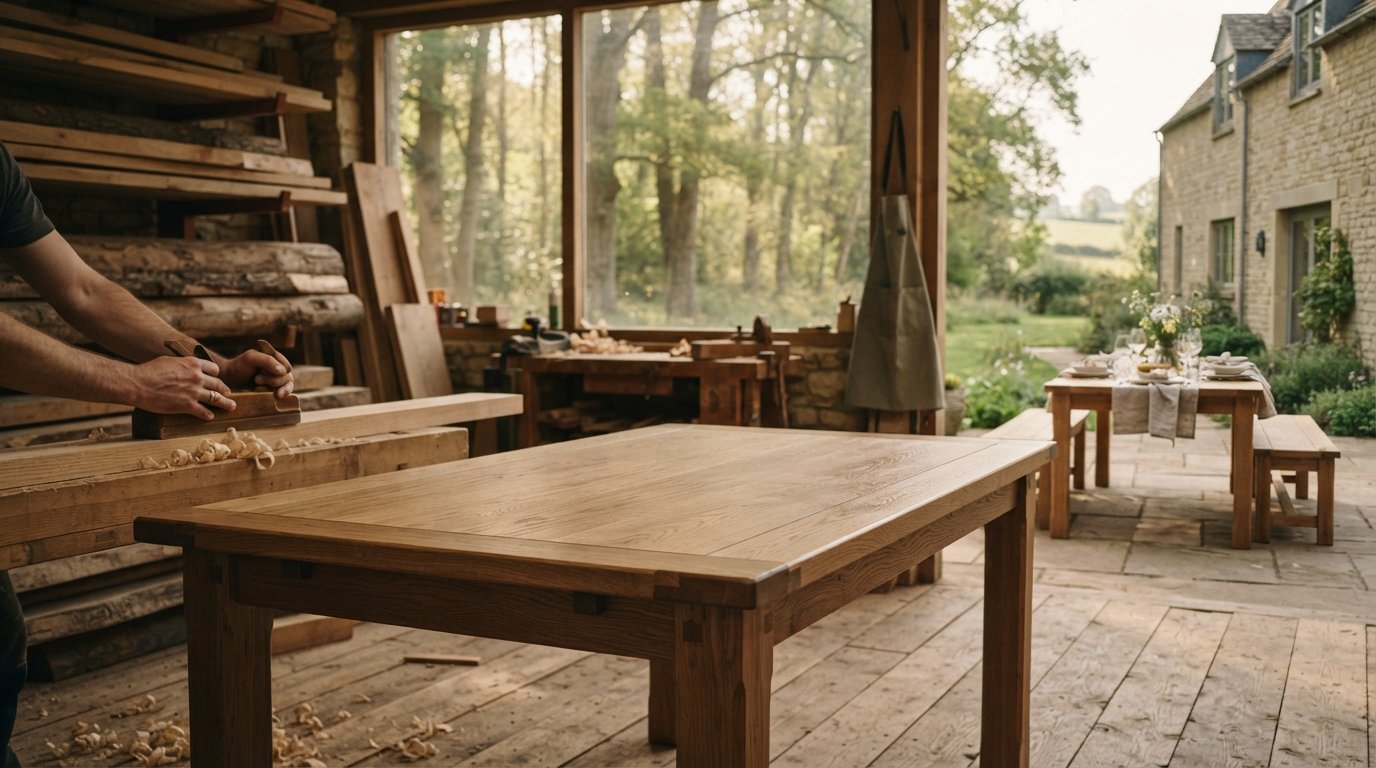
The Table Guy makes Prosecco Dining Tables for venues seeking a distinctive focal point in their dining space. The range also includes Farmhouse Tables, Bamboo & Hardwood Tables, and Scaffold Board & Pine Tables, each bringing a different timber character to a restaurant interior.
Consider these options when your layout calls for a particular finish or an individual feel. A farmhouse design can bring a traditional note, while hardwood, scaffold board and pine introduce visible timber character. The right choice depends on your room’s style, intended use and planned arrangement.
Share your preferred style and layout with The Table Guy to explore its table options. Visit thetableguy.co.uk to get in touch.
Shape a dining space that feels considered
Your final choice should feel at home in the venue, not simply fill a gap in the floor plan. Think about the atmosphere you want guests to remember, then choose a table style and material that supports it. Commercial restaurant tables in the UK can be practical furnishings and part of a room’s character.
If a distinctive timber look suits your plans, The Table Guy makes Prosecco Dining Tables, Farmhouse Tables and Bamboo & Hardwood Tables. These options offer different design directions as you shape your space. Consider the finish and overall feel you want, then take the next step at your own pace.
Contact The Table Guy about tables to explore the options for your venue. A thoughtful choice can help bring your dining space together, and your plans can start with the style that feels right.
Frequently Asked Questions
What types of commercial restaurant tables are available in the UK?
UK venues can choose dining, bar-height and coffee tables in a range of shapes, materials and styles. A café might use compact square tables for flexible seating, while a restaurant could combine larger rectangular tables with round options. Timber, metal and marble-top designs create different visual effects. For a distinctive timber-led choice, The Table Guy makes Prosecco Dining Tables, Farmhouse Tables and Bamboo & Hardwood Tables.
How much do commercial restaurant tables cost in the UK?
Cost depends on a table’s dimensions, materials, construction and whether it is made to order. A larger top uses more material, while a detailed base or specialised finish can affect the work involved. Compare like with like: size, material, finish and whether seating is included. If your venue is buying several tables, a consistent specification makes quotes easier to assess.
Which materials are best for restaurant tables in commercial use?
The best material depends on your venue’s look, use and care routine. Hardwood and pine bring visible timber character, while bamboo offers another natural option. Metal can suit a contemporary or industrial interior. A café might choose timber for a warmer feel, while a modern bar could use metal details to complement its interior. Consider the whole table, including its top and base.
How can restaurants choose tables that are durable, easy to clean and suitable for heavy use?
Assess the whole table, not just its surface. Look at how the top meets the base, whether the table feels stable and whether edges or details could complicate routine cleaning. Consider daily service: a busy café may need surfaces staff can wipe efficiently between guests. Match the care routine to the material, and follow the maker’s cleaning and upkeep instructions.
How do UK commercial table suppliers compare on price, quality and warranty?
Compare tables with the same height, finish, dimensions and intended use. Prices vary with materials, construction, finish and size; also consider durability, upkeep and whether seating is included. The article provides no supplier warranty comparison.
What are the UK fire safety and other regulations for restaurant furniture?
The supplier offers guidance on selecting restaurant furniture described as BS 7176 Crib 5 fire safe. FIRA was established over 60 years ago to help UK furniture manufacturers assess whether chairs and tables are suitable for contract environments.
Comments