
Custom Depth Bookshelves for Homes and Reading Spaces
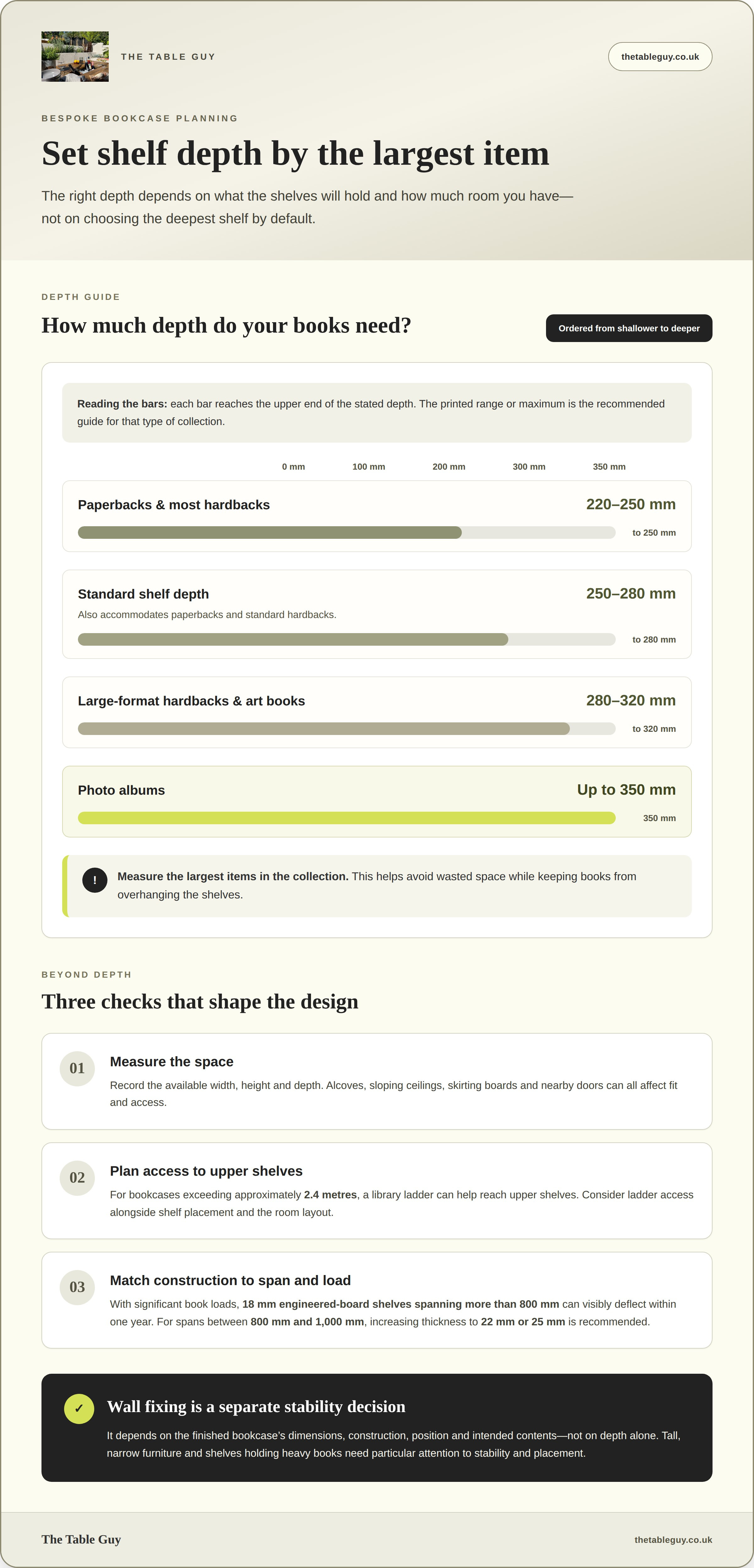
The deepest shelf isn’t automatically the best fit. A custom depth bookshelf for paperbacks and most hardbacks can be 220-250 mm deep; large-format hardbacks and art books generally need 280-320 mm, while photo albums can require up to 350 mm. The right measurement depends on what the shelves will hold and how much room you have.
Choosing a custom depth bookshelf means looking beyond depth alone. The books and objects you plan to store, shelf span, material and finish all shape the design. Height, construction and placement also affect stability and whether wall fixing is needed. Settling these details early helps create a bookcase that fits your space and works for everyday use.
This guide explains how to choose a depth, compare materials and finishes, and understand what influences production time. It also covers the considerations behind wall fixing, so you can plan a bookcase that suits your books, your space and the way you use it.
Table of Contents
When does a bespoke bookcase need fixing to the wall?
A bespoke bookcase may need wall fixing if its height, design or loaded weight affects its stability. The right approach depends on its dimensions, construction, position and intended contents. Tall, narrow furniture and shelves holding heavy books need particular attention to stability and placement.
Depth should follow the books, not a standard furniture measurement. Paperback and most hardback collections can suit shelves 220-250 mm deep, while standard shelf depths of 250-280 mm also accommodate paperbacks and standard hardbacks. Large-format hardbacks and art books generally need 280-320 mm; photo albums can require shelves up to 350 mm deep. A professional uses the largest items in the collection to set the depth, avoiding wasted space without leaving books overhanging.
For alcoves, walls and awkward spaces, the designer measures the available width, height and depth, then adapts the bookcase dimensions to the room. Sloping ceilings, skirting boards and nearby doors can affect the fit and access. A configurator helps turn those measurements and choices into a design: the professional can set the dimensions, shelf arrangement and intended use, then review how the proposed piece fits the space.
The cost of a bookcase depends on its size, materials, finish, construction and any fitting work. There is no single UK price for every custom depth bookshelf: a simple design and a large fitted piece have different specifications. A bespoke bookcase is commissioned from a furniture maker to suit the room and the items it will hold.
Height also affects everyday access. For bookcases exceeding approximately 2.4 metres, a library ladder can help reach upper shelves. The professional considers ladder access alongside shelf placement and the room layout. Wall fixing is a separate stability decision, based on the finished design and its position, rather than depth alone.
Made-to-measure production times
A made-to-measure bookcase goes through several stages before delivery. First, the maker reviews the dimensions, shelf layout, materials and finish. After you agree on the design, the materials are prepared and the piece is made. Delivery or fitting follows, depending on the project, and each stage contributes to the overall schedule.
Accurate measurements help prevent avoidable changes during production. Share the room’s width, height and depth, along with details such as alcoves and skirting boards. Changes to shelf spacing or depth after work begins can affect material preparation and construction. Agreeing the specifications early gives the maker a clear brief to work from.
Material and finish choices also influence the sequence. Timber may need cutting, joining, sanding and finishing, while a design with metal components may need additional preparation. For powder-coated components, allow approximately 5-10 working days for coating. That process is separate from the time needed to design, build and deliver the complete bookcase.
Plan around the full production sequence, rather than treating delivery as the only date that matters. Allow time to agree the design, make the bookcase, apply the finish and arrange delivery. If you have a preferred timeframe, mention it at the outset so the maker can take it into account alongside the dimensions and design details.
Before production begins, agree the specifications and ask which stages are included in the expected schedule. Distinguish workshop completion from delivery or fitting, where applicable. A delivery estimate alone may not cover design discussions or finishing work. Knowing what each date refers to makes it easier to plan the room and your next steps.
For made-to-order shelving, bespoke shelving can be designed around your room and intended use. Share the space dimensions, preferred materials and finish, then discuss how these choices shape the production sequence.
Materials and finishes
Choose materials by balancing appearance, use and the character you want in the room. Solid wood shows natural grain, so boards can vary in tone and markings. Birch plywood offers a layered edge, while engineered board creates a more uniform surface. A professional considers how each choice suits the bookcase’s design and the space around it.
Pine and hardwood can bring visible grain and a natural feel to a traditional scheme. Bamboo has a more linear appearance, while a painted surface creates a consistent colour. To choose a finish, compare it with the room’s existing furniture, flooring and wall colours rather than assessing a sample on its own.
Finish affects both appearance and care. A clear finish leaves the material visible, while a coloured coating changes its overall look. For wood, a clear coat of wax once a year can help maintain the finish. Follow care guidance suited to the specific surface treatment and material you choose.
Ask how the material will look across the finished piece. Grain direction, joins and exposed edges all affect the result. A natural wood finish can make variations between boards more noticeable, while paint can create a more consistent appearance across shelves and side panels. Samples can help you compare colour and texture before production.
Consider how the bookcase will work with the room’s existing furniture. Pale timber can keep a compact reading corner feeling open, while a darker stain can define a larger unit against the wall. For a custom depth bookshelf, choose a material and finish that suit the dimensions, intended use and room scheme. Agree these details before production.
Shelf materials and construction
A shelf’s unsupported span matters as much as its material. With significant book loads, 18 mm engineered-board shelves spanning more than 800 mm can visibly deflect within one year. The longer the unsupported span, the more the shelf must resist bending. Construction choices should therefore match the shelf width and the weight it will carry.
For spans between 800 mm and 1,000 mm, increasing the thickness to 22 mm or 25 mm is recommended. This gives the shelf more material to resist bending across the gap. A professional considers the proposed shelf length alongside its intended contents, rather than selecting thickness from appearance alone.
Beyond 1,000 mm, solid wood or birch plywood is recommended for shelves. These material choices can suit wider bookcases where long spans need careful support. The maker also considers how the shelf connects to the sides and whether the design includes intermediate supports. Those construction details influence how the finished bookcase carries its load.
Edge treatment can change the look without requiring a much thicker shelf throughout. Hardwood lipping can increase the visible front edge from 18 mm to around 35 mm. This creates a substantial appearance at the front, while the shelf body remains slimmer. It is a useful design detail when a room calls for a heavier visual profile.
A full-carcass bookcase uses 18 mm high-density moisture-resistant engineered board throughout. That specification describes the carcass, not a universal rule for every shelf span or book load. The shelf material, thickness and support still need to suit the design. For example, a wide shelf holding heavy hardbacks calls for a different construction decision from a short shelf displaying lighter objects.
Before production, the maker can align shelf spans, material and edge details with the bookcase design. Discuss your shelving design to shape a made-to-measure piece around the intended contents and room.
The Table Guy
The Table Guy makes bespoke furniture to order, including Prosecco Dining Tables, Farmhouse Tables, Bamboo & Hardwood Tables, and Scaffold Board & Pine Tables. Considering how different materials and finishes shape the character of furniture can help you develop a clear design brief for your home.
For a reading space, consider how the bookcase will sit alongside the rest of your furniture. Timber tones, surface finishes and proportions can help create a consistent look across the room. The Table Guy makes bespoke furniture to order, so you can discuss how material and finish choices suit your preferred style and space.
If you’re ready to discuss your furniture plans, contact The Table Guy.
Shape a bookcase around the way you live
A bookcase can do more than store books. It can bring order to an alcove, make a reading corner feel intentional or become a focal point in a room. Start by deciding what you want the space to feel like and what role the furniture should play.
For a custom depth bookshelf, start with what you want to store, the character of the room and the finish you prefer. These details give a furniture maker a practical brief for designing a bookcase that fits the space and suits its intended use.
If you’re ready to discuss your ideas and explore made-to-order furniture, contact The Table Guy. Bring your plans, preferred materials and sense of style to the conversation. A thoughtful beginning can help turn an underused wall into a reading space that feels distinctly yours.
Frequently Asked Questions
How does a professional determine how deep a bookcase should be?
Consider the largest books in your collection, how you plan to store them and the space available. Slim paperbacks need less depth than large art books or albums. Think about whether books should sit flush with the shelf edge and whether doors, walkways or nearby furniture need clearance. Sharing examples of the books helps the maker plan a practical design.
Is it possible to use a mix of materials?
Yes, a bookcase can combine materials for contrast or to suit different practical needs. Timber shelves with metal supports, for example, create a different look from an all-wood design. Consider how the materials meet, how their colours and textures work together, and how each component suits the intended use. Agree the combination as part of the design before production.
What measurements should you provide for an alcove?
Measure the alcove’s width, height and depth, and note any changes across the opening. Record the width near the floor, halfway up and near the top, as the walls may not be straight. Include skirting boards, pipes, sockets, window ledges and nearby doors. Photos of the whole alcove and close-ups of obstructions can help the maker understand the space.
How does a professional measure for a custom depth bookshelf?
A furniture maker can use your measurements to plan how the bookcase will fit, accounting for wall irregularities, skirting and other obstacles. They can also compare the usable depth with the books and objects you intend to store. Remember that external dimensions are not the same as usable shelf space, which is reduced by the sides and back.
What depths are available for made-to-measure bookshelves in the UK?
Made-to-measure depths can be designed around the collection rather than chosen from a single fixed size. Useful planning ranges include 220-250 mm for paperbacks and most hardbacks, 280-320 mm for large-format hardbacks and art books, and up to 350 mm for photo albums. These are guide measurements for matching shelves to contents, not a limit on bespoke design.
How do custom bookshelf depth and shelf spacing affect different book sizes?
Depth determines whether a book fits from front to back; shelf spacing determines whether it fits upright. A tall hardback may need more clearance between shelves than a paperback, while an oversized art book may need extra height and depth. A varied shelf layout can accommodate different formats without making every shelf unnecessarily tall or deep.
Comments