
Matching Sideboards and Dining Tables for Your Dining Room
A matching sideboard and dining table don’t need identical finishes to look considered together. The right pairing can bring different materials or colours into the room, as long as their proportions, details and overall feel suit your chairs and available space. The Table Guy makes bespoke sideboards and tables to help bring these elements together, with storage planned around how you use the room.
It’s natural to want dining furniture to feel cohesive, but matching every surface can make a room feel too uniform. Aim for a connection between the pieces through complementary wood tones, a shared detail or a deliberate contrast. This guide explains how to coordinate a sideboard with your table and chairs, compare materials and finishes, and plan practical storage. You’ll have a clear starting point for a dining room that feels harmonious, personal and ready for everyday life.
Table of Contents
Matching materials and colours with a dining table
A coordinated dining room depends on how materials, colour and shape relate across the furniture. Compare the table, sideboard and chairs together rather than choosing each piece in isolation.
Wood materials and finishes
Wood choices such as solid oak, pine, reclaimed timber and bamboo give tables and sideboards distinct grain patterns and tones. Consider how you’ll use each piece and how its surface will be finished. Look at grain, colour and sheen together, then decide what storage you need, such as cupboards or drawers. Discuss the finish and internal layout as part of the design.
Exact matches and coordinated colours
A sideboard doesn’t need to match the dining table exactly. Coordinating finishes can create a more layered room: a dark metal frame beside an oak finish is one example of contrasting materials working together. Choose a shared detail, such as a similar wood tone or dark metal feature, to connect the pieces. This approach suits rooms where an exact colour match might feel too uniform.
When comparing finishes, consider the room’s existing colours alongside the table. A warm-toned table could sit comfortably with a sideboard in a related wood shade, while a contrasting finish gives the pairing more definition. Make the difference feel deliberate rather than accidental.
Style also shapes the result. A farmhouse table can pair with a simple wooden sideboard, while a table with metal legs may suit a sideboard with darker accents. Shared details and considered contrast can create a cohesive look without identical finishes.
Before choosing, set out a simple palette: the table material, sideboard finish and chair colour. Identify one link between them, such as related wood tones or a repeated dark frame. This makes it easier to judge whether a new finish complements the room.
Keep everyday use in mind, too. A dining room used for regular meals may need a durable table surface and practical storage for serving pieces. Aim for a combination that balances function with the warmth and character of the materials.
Coordinating sideboards with dining tables and chairs
A balanced arrangement considers the dining table, chairs and sideboard as one composition. A furniture maker weighs their width, visual weight and daily use, so the storage feels connected to the dining set without crowding the room.
Sideboard size depends on the available wall and the table’s proportions, not a fixed matching rule. Market examples range from 120cm to 170cm wide, showing how different footprints can suit different rooms. A maker can use the table dimensions, room layout and storage needs to judge whether a narrower or wider piece will feel in scale.
The space needed between a sideboard and dining chairs depends on how the chairs move and how people pass through the room. Consider the chair both in use and pulled back, along with access to the sideboard’s doors or drawers. This helps preserve a practical route through the dining area.
For a contemporary arrangement, repeat a detail across the pieces: a dark table frame might echo a sideboard handle, while chair legs pick up the table’s timber tone. A display cabinet can add visual lightness, especially when its contents are arranged with care. Each choice should support everyday use as well as the overall look.
Chairs from different ranges can work together when they share a feature, such as similar seat shapes, colours or leg finishes. For example, two chair designs in the same muted colour can look intentional around one table. Consider how the chairs sit beside the sideboard, keeping the mix harmonious and the storage practical.
For a joined-up plan, explore bespoke sideboards and dining furniture shaped around your room, table and preferred seating arrangement.
Sideboards and other dining-room storage
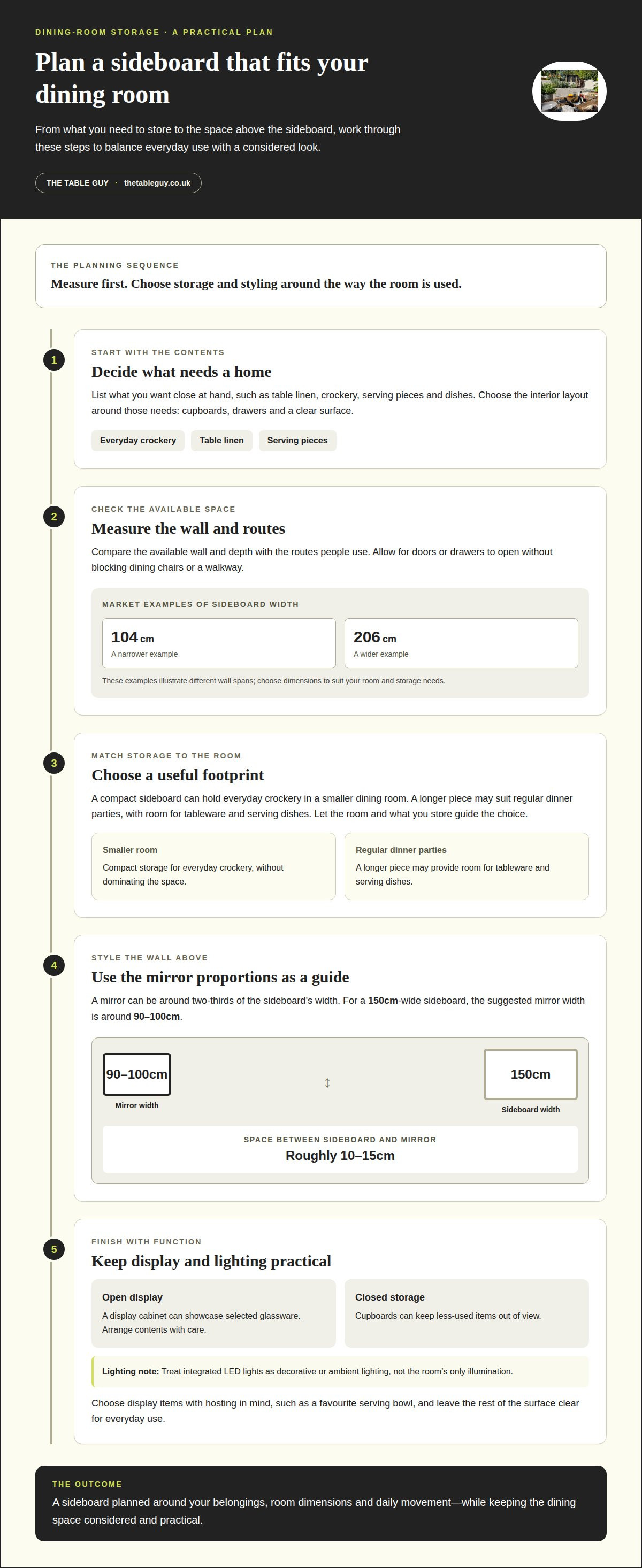
Plan dining-room storage around what needs to be close at hand, from table linen to serving pieces. A sideboard can keep these items accessible during hosting, while its top provides space for a lamp or a carefully chosen display. A furniture maker considers the dining space, existing interior and table position together, so practical storage doesn’t disrupt movement around the room.
Start by considering the sideboard’s width and depth against the available wall and the routes people use. Market examples include sideboards measuring 104cm and 206cm wide, illustrating how storage can suit different wall spans. Accurate measurements help a maker shape a useful arrangement, with enough room for doors or drawers to open without blocking dining chairs or a walkway.
In a smaller dining room, a compact sideboard can store everyday crockery without dominating the space. A longer piece may suit regular dinner parties, with room for tableware and serving dishes. Choose according to what you need to store and how you use the room. Plan the interior around those needs, balancing cupboards, drawers and a clear surface.
Styling brings the sideboard into the wider room. A mirror above it can be around two-thirds of the sideboard’s width; for a 150cm-wide sideboard, a mirror around 90-100cm wide is suggested. Leave roughly 10-15cm between the sideboard top and mirror bottom. These proportions help the display feel considered rather than crowded.
If a sideboard has integrated LED lights, treat them as decorative or ambient lighting, not the room’s only illumination. A display cabinet can showcase selected glassware, while closed cupboards keep less-used items out of view. Choose display items with hosting in mind, such as a favourite serving bowl, and leave the rest of the surface clear for everyday use.
If your dining room needs more than one storage piece, coordinate a sideboard with shelving or a display cabinet. Repeating a material or finish connects the pieces, while varied shapes keep the space from feeling overly uniform.
Choosing a sideboard style and finish
A furniture maker can shape a sideboard around the dining room’s style, storage needs and existing furniture. For a matching sideboard and dining table, the design choices include the sideboard’s form, surface finish and details such as handles or cupboard fronts. A simple outline can keep attention on a detailed table, while a more distinctive sideboard can bring character to a restrained interior.
Start with the room’s flooring, wall colour and lighting. A maker can consider these alongside your table and chairs, then suggest finishes that complement the space. Share photographs and reference images to show whether you prefer a calm, consistent look or a stronger contrast. This helps clarify how the sideboard can connect with the dining furniture without copying every detail.
Next, consider how you’ll use the sideboard. Cupboards can hold larger serving dishes, while drawers organise smaller items used at dinner. If you plan to display ceramics or glassware on top, factor that into the design and finish. For a matching sideboard and dining table, balance these practical choices with the sideboard’s shape and visual weight.
Browse styles with a purpose: note whether you prefer clean lines, visible timber character or a darker finish. Then consider how those details could work in a made-to-order piece. A carefully selected finish can complement the table without making every surface identical, helping the furniture sit naturally in the room as accessories change.
To discuss a sideboard shaped around your dining room’s character and storage needs, share your preferred style and finish.
The Table Guy: Prosecco Dining Tables
The Table Guy can help plan a matching sideboard and dining table around your room and how you use it. Prosecco Dining Tables offer one starting point, alongside Sideboards/Consoles & TV Units for coordinated storage. Farmhouse Tables and Bamboo & Hardwood Tables provide other options when their character better suits your dining space.
Share your room’s layout, what you want to store and the atmosphere you’re aiming for. These details help shape a matching sideboard and dining table with considered proportions and complementary finishes, without requiring identical surfaces. The result can reflect your practical needs and personal style.
To plan a coordinated dining room, contact The Table Guy to discuss the combination you have in mind.
Shape a dining room that feels like yours
Before settling on a design, picture the moments you want the room to hold: a quiet weekday meal, a lively dinner with friends, or both. That purpose can guide your choices and help a matching sideboard and dining table feel connected to your life, not simply coordinated in appearance.
Talk through your preferences with The Table Guy. A photograph of the room, a note about what you want to store and a sense of the atmosphere you hope to create can turn broad inspiration into a clear design direction. You don’t need every detail decided; start with what matters most to you.
Contact The Table Guy to talk through the dining room you have in mind. Take the next step at your own pace, and let a thoughtful design begin with the way you want to live.
Frequently Asked Questions
How does a furniture maker match a sideboard with a dining table?
Consider the table’s shape and distinctive details, then carry a related feature into the sideboard’s design. For example, a table with strong, simple lines could pair with a sideboard with a similarly clean outline, even if the finish differs. Also consider how both pieces sit within the room, including the view from its main entrance.
How does a furniture maker coordinate wood tones, finishes and colours in dining furniture?
A furniture maker considers the room’s existing palette, including flooring, wall colour and nearby fabrics, before settling on complementary tones. A useful approach is to choose one dominant material, then repeat a smaller accent elsewhere, such as a dark detail in a chair or sideboard. Comparing finishes together in the dining room helps reveal how daylight and evening lighting affect their appearance.
How can a furniture maker style a sideboard for a small dining room?
For a small dining room, tailor the sideboard’s proportions and internal layout to the available space and your storage needs. Cupboards can keep everyday clutter out of sight, while a clear section of the top remains useful when serving dinner. A restrained display of a few personal objects adds character without making the room feel busy.
Matching sideboard and dining table sets available in the UK
The Table Guy makes coordinated sideboards and dining tables to order. They don’t need identical finishes: shared details or complementary materials, such as a dark frame with oak, can bring the pieces together.
How much do matching dining tables and sideboards cost in the UK?
These are individual sideboard prices, not prices for matching table-and-sideboard sets.
Comments