
Solid Wood Furniture: How Long It Lasts and Why It Pays
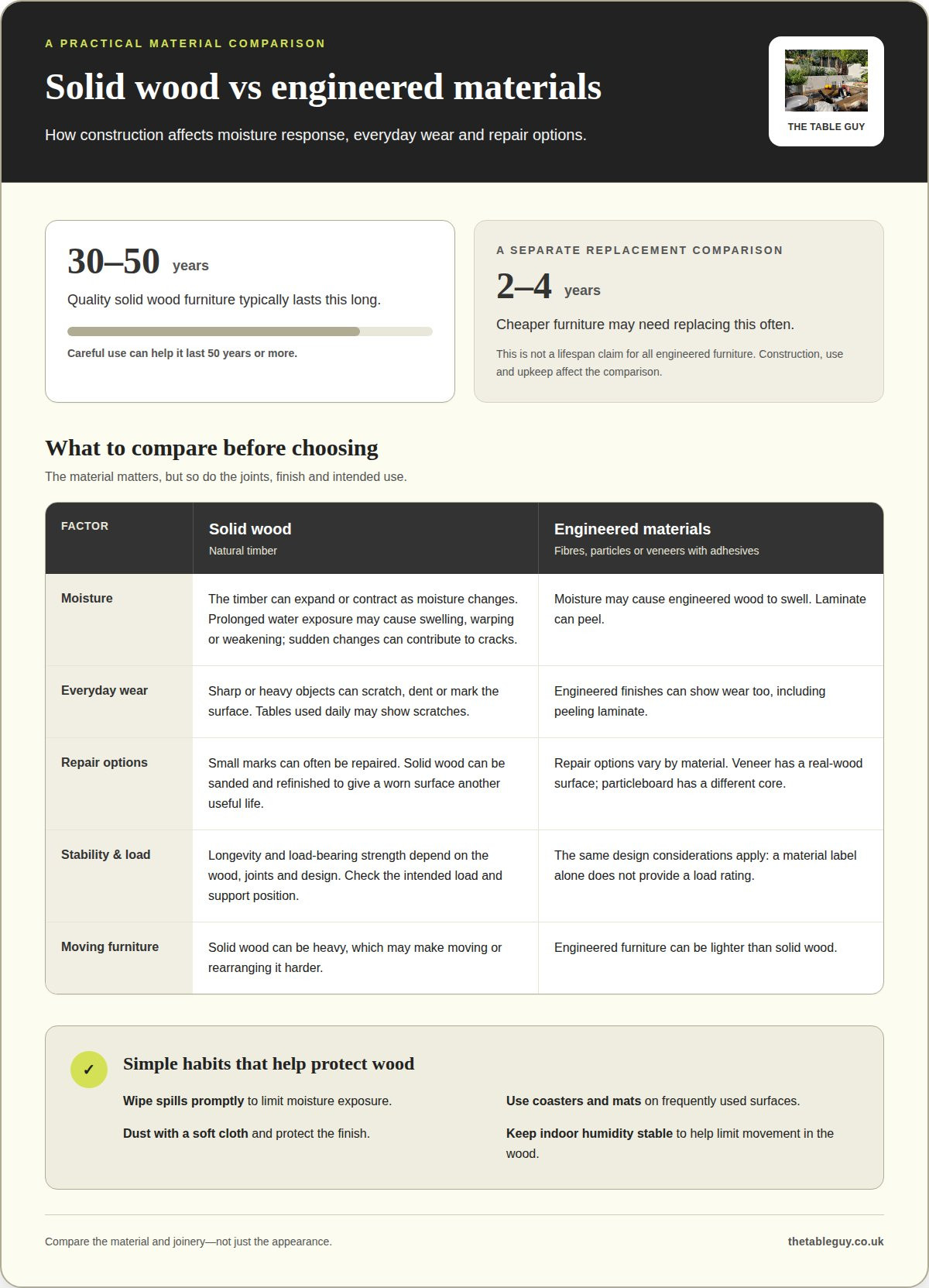
Quality solid wood furniture typically lasts 30-50 years, and with proper care it can last 50 years or more. That longevity is a key reason why people invest in solid wood furniture: a well-made piece can serve a home for decades rather than being replaced after a short spell of use. Its lifespan still depends on the quality of the wood, its construction and how it’s cared for.
It’s understandable to weigh the upfront cost of solid wood furniture against furniture made from engineered materials. This article explains how solid wood can stand up to years of use, how its strength and durability compare with engineered alternatives, and why responsible timber sourcing matters. You’ll also find practical care advice, from protecting surfaces against spills and scratches to preserving the wood’s character over time.
Table of Contents
How Long Does Solid Wood Furniture Really Last?
Quality solid wood furniture can last 30-50 years, with careful use helping pieces serve generations. Its value depends on construction, daily wear and the care it receives.
Initial cost and lasting value
The upfront cost is what you pay initially; lasting value depends on how long the furniture remains useful. In the UK, prices vary by timber, furniture type, size and construction, so there is no single meaningful price for every solid wood piece. To identify solid wood, look at exposed edges and surfaces for continuous timber grain. Veneer has a thin layer of wood over another material, while wood-look finishes imitate grain. Dust with a soft cloth, wipe up spills promptly and use coasters to help protect the finish.
Replacement savings and costs
Replacement savings come from keeping a durable piece in use instead of buying another after a few years. Solid wood furniture can last 30-50 years, while cheaper furniture may need replacing every 2-4 years. Over a 20-30-year period, that repeated buying can affect the overall value, even when the initial purchase costs less. Tables used daily may show scratches, but small marks on solid wood can often be repaired rather than requiring replacement. The comparison depends on construction, use and upkeep.
Risks of warping, cracking and weight
Solid wood responds to its surroundings: changes in moisture can make it expand or contract. Prolonged water exposure can cause swelling, warping or weakening, while sudden changes in conditions can contribute to cracks. Wipe up spills promptly and keep indoor humidity stable. Solid wood can also be heavy, which may make moving or rearranging it harder than with lighter engineered furniture. Sharp or heavy objects can scratch or dent the surface, so use coasters and mats to protect frequently used areas.
Strength and durability compared with engineered materials
Solid timber and engineered wood respond differently to everyday pressure, moisture and wear. The better choice depends on how the furniture is built and how you plan to use it.
Strength compared with engineered materials
Solid wood is cut from natural timber. Engineered wood combines fibres, particles or veneers with adhesives, and that construction affects how each material handles stress and damage. Engineered wood can work well for everyday furniture, but moisture may cause it to swell and laminate can peel. Solid timber can also be marked, though surface damage may be repairable. Compare the material and joinery, not just the appearance.
Resistance to daily wear
Durability is how well furniture withstands regular use, from meals and movement to objects placed on its surface. A dining table gets frequent contact, so its finish and construction matter as much as the timber. Sharp or heavy objects can scratch, dent or mark solid wood. Coasters and mats help protect the surface, and wiping up spills promptly limits moisture exposure. Engineered finishes can show wear too, including peeling laminate.
Longevity and load-bearing strength
Longevity depends on the wood, the joints and how the design supports weight. Dovetail, finger and mortise-tenon joints can indicate careful craftsmanship, but the overall design matters too. A broad span, thin support or loose joint can affect stability whatever the material. For shelves and tabletops, consider the intended load and how the supports are positioned. A material label alone does not provide a load rating.
Solid wood can be sanded and refinished, giving a worn surface another useful life. Engineered materials vary: veneer may have a real-wood surface, while particleboard has a different core. These differences affect repair options, durability and environmental impact. For a timeless interior, responsible sourcing and careful construction matter as much as appearance. Before choosing furniture for regular use, examine its edges, joints and finish together.
Sustainable forestry and environmental impact
Environmental impact starts with where timber comes from, not how it looks in a modern interior. Responsibly sourced solid wood is renewable and biodegradable, but the word “wood” alone says little about how it was harvested. Attractive grain is not proof of ethical sourcing. Look for makers who explain their approach to timber sourcing, and assess the wood’s origin rather than judging only by colour or finish. Understanding why to invest in solid wood furniture includes considering where its timber comes from.
Wood production generally uses less energy than manufacturing plastics or metals. That comparison is useful, but it doesn’t mean every wooden item has a low environmental impact. Timber origin and useful life matter too: furniture kept in use for decades avoids frequent replacement. To understand why to invest in solid wood furniture, weigh the material, construction and expected use together. A durable table used daily, for example, serves a different purpose from temporary furniture used only occasionally.
Mango wood shows how sourcing can shape a material’s story. Furniture may be made from trees that have completed their fruit-producing life, giving the timber another purpose. That does not mean every mango-wood piece has this origin, so responsible sourcing still matters. Solid wood can also be recycled or repurposed when its first use ends. A tabletop, for example, might find another role instead of going straight to disposal.
Finishes deserve as much attention as timber. Natural oils and water-based finishes are recommended over chemical varnishes for health and environmental reasons. The finish affects both the surface’s appearance and its care needs, so include it in your assessment. If solid wood becomes worn, repairing it can help keep the furniture in use. Choosing responsibly sourced timber, a considered finish and a repairable design connects environmental impact with practical decisions at home.
Solid wood furniture longevity
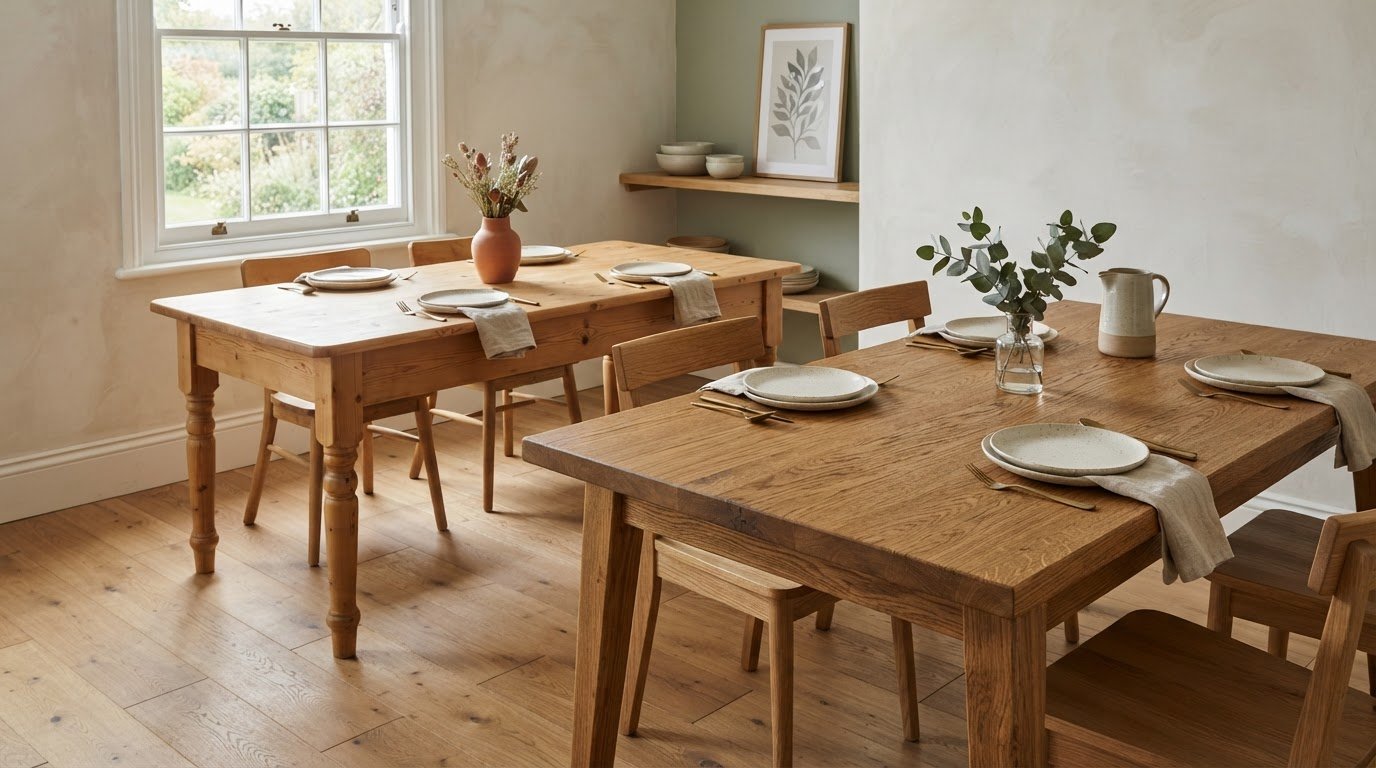
Longevity means more than surviving years of use; it also means remaining useful as a home changes. Antique solid wood pieces more than a century old show how natural wood can outlast short-lived trends. Their character comes from visible grain, texture and craftsmanship, rather than a finish designed to imitate timber. That enduring quality helps explain why a well-made piece can remain part of a home across generations.
Time needn’t mean a table loses its appeal. Sanding and refinishing can restore a 10-year-old solid wood table to look completely new. Re-staining, re-polishing or repainting can also refresh the surface, while repairs can address damage. Resizing may help a piece suit a changed room or household. Unlike alternatives that rely on a thin decorative layer, natural wood can offer more scope for renewing its appearance.
Regular care helps protect a piece’s function and finish. Wood expands and contracts as moisture levels change, so stable indoor humidity can help limit stress. Prolonged water exposure can cause swelling, warping or weakness; wiping up spills promptly reduces that risk. Direct sunlight can fade or discolour timber, so moving furniture away from harsh light helps preserve its colour. Check periodically for cracks or warping to spot changes early.
The lasting value lies in keeping furniture useful, not simply keeping it untouched. A table can gather marks from daily life, then regain a fresh surface through refinishing. Its natural grain still gives the room warmth, even as surrounding décor changes. For a piece made to suit your home and intended to stay, explore solid wood table options.
The Table Guy: Prosecco Dining Tables
The Table Guy makes bespoke tables for anyone choosing a distinctive piece for long-term use. Its Prosecco Dining Tables offer a characterful option for a dining space, while Farmhouse Tables suit homes seeking a traditional feel. For a natural timber look, consider Bamboo & Hardwood Tables or Scaffold Board & Pine Tables.
Each table is made to order, giving you room to consider how its material and design will work in your home. Think about where it will sit, how you’ll use it each day and which look you’ll enjoy beyond changing trends. These choices connect a table’s practical role with its lasting place in your interior.
Contact The Table Guy to discuss a bespoke table for your home.
Choose a piece for the home you’re creating
Furniture shapes everyday life, from family meals to quiet moments around the table. If you’re weighing why to invest in solid wood furniture, think about the piece you want to live with, not just the room you’re furnishing today. A thoughtful choice can reflect your taste and suit the way you use your home.
The Table Guy offers Prosecco Dining Tables, Farmhouse Tables and Bamboo & Hardwood Tables, each with a distinct look to consider. Picture a table in your space and think about which material and character feel right for your household. The decision is personal, so take time to choose a piece that suits your needs.
Ready to explore a table that suits your home? Contact The Table Guy and take the next step towards a piece you’ll be glad to gather around.
Frequently Asked Questions
What are the benefits of solid wood furniture compared with veneer or engineered wood?
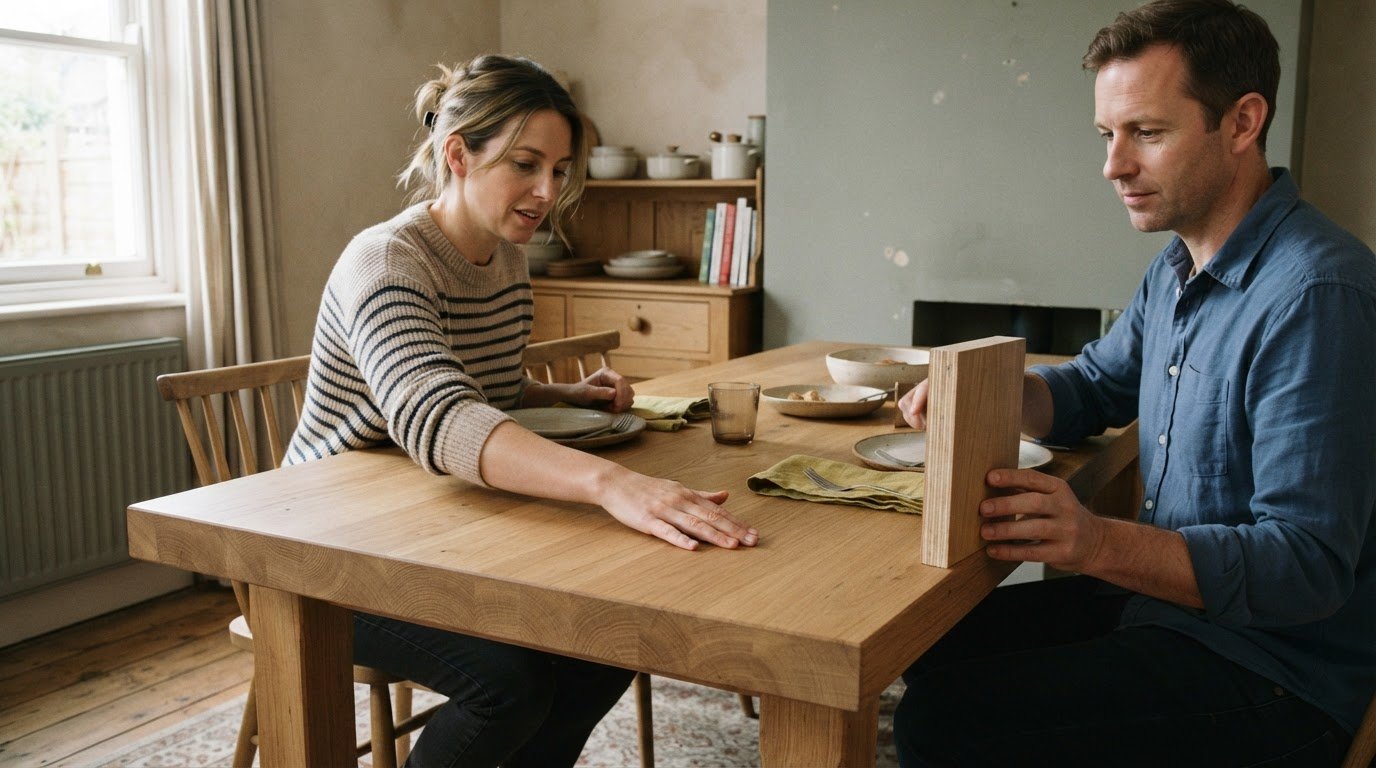
Solid wood has natural grain throughout the timber, while veneer is a thin wood surface over another material. That difference matters if a table edge is chipped or its surface needs refreshing: construction affects what can be repaired and how. Compare visible edges, underside surfaces and joinery, not just the top finish. Veneer can still be a practical choice for some rooms and budgets.
How long does solid wood furniture typically last?
Quality solid wood furniture can last for decades, depending on its construction, use and care. A dining table used daily faces different demands from a side table in a quieter room. Check that the joints feel secure, avoid leaving water on the surface, and keep the piece away from prolonged direct sunlight. These habits help preserve its function and appearance over time.
Is solid wood furniture worth the higher upfront cost in the UK?
Solid wood can be worthwhile if you expect to use a piece for years and value repairable materials. Look beyond the purchase price: consider how often you’ll use the furniture, whether its size suits your home and how easy it is to maintain. A table used daily for family meals may justify a different decision from furniture for occasional use in a spare room.
Which wood species are best for durable furniture, and how do they compare?
Oak and maple are durable hardwood choices, while pine is lighter and often more affordable. Acacia, teak and sheesham are also cited as durable options; the right fit depends on the intended use and the look you prefer. Oak, maple, cherry, mango and walnut are all used in furniture-making. Compare the timber’s character, construction and finish together rather than choosing by species name alone.
Does solid wood furniture retain its value or have good resale potential?
Solid wood furniture may appeal to future buyers if its condition, design and craftsmanship remain desirable. Keep care instructions and information about the wood or maker, and avoid changes that obscure the piece’s original character. A classic table in good condition may suit more interiors than a highly specific design. Resale value depends on the individual piece and buyer interest.
What are the environmental impacts of solid wood furniture, and what UK or FSC certifications should buyers look for?
Responsible sourcing matters because environmental impact depends partly on where timber comes from and how it is harvested. Look for an FSC certification claim linked to the furniture or its timber, and read the product information to understand what it covers. Ask whether the wood is responsibly sourced, and consider whether the piece can be repaired, reused or repurposed instead of discarded.
Comments