
Solid wood vs veneer: which furniture should you choose
Solid wood is a strong choice for furniture you want to sand, refinish and keep for years; veneer may suit you better if you want a lighter piece that is less prone to movement. The key difference is construction: solid wood is timber throughout, while veneer is a thin layer of real wood attached to a core material. Comparing the pros and cons of solid wood vs veneer furniture means looking beyond the surface.
It’s easy to see the appeal of both materials. Solid timber has distinctive grain and a substantial feel, while veneer offers the look of real wood with less natural movement. Neither is automatically right for every room or budget. The best choice depends on how you’ll use the furniture and which qualities matter most.
This guide compares the materials in appearance, durability, care and repair, with a closer look at solid oak’s workability and seasonal movement. Use the practical pointers to weigh the trade-offs and choose furniture that suits your home.
Table of Contents
What is Solid Wood?
Solid wood furniture is made from natural timber throughout its main wooden components, such as oak, rather than a wood layer fixed to a core. Veneer is a thin slice of real wood applied to plywood, MDF or particleboard. What are the pros and cons of veneer furniture? It gives you a natural-wood surface, often at a lower cost and with less movement, but its thin layer can chip or peel and may be difficult to repair.
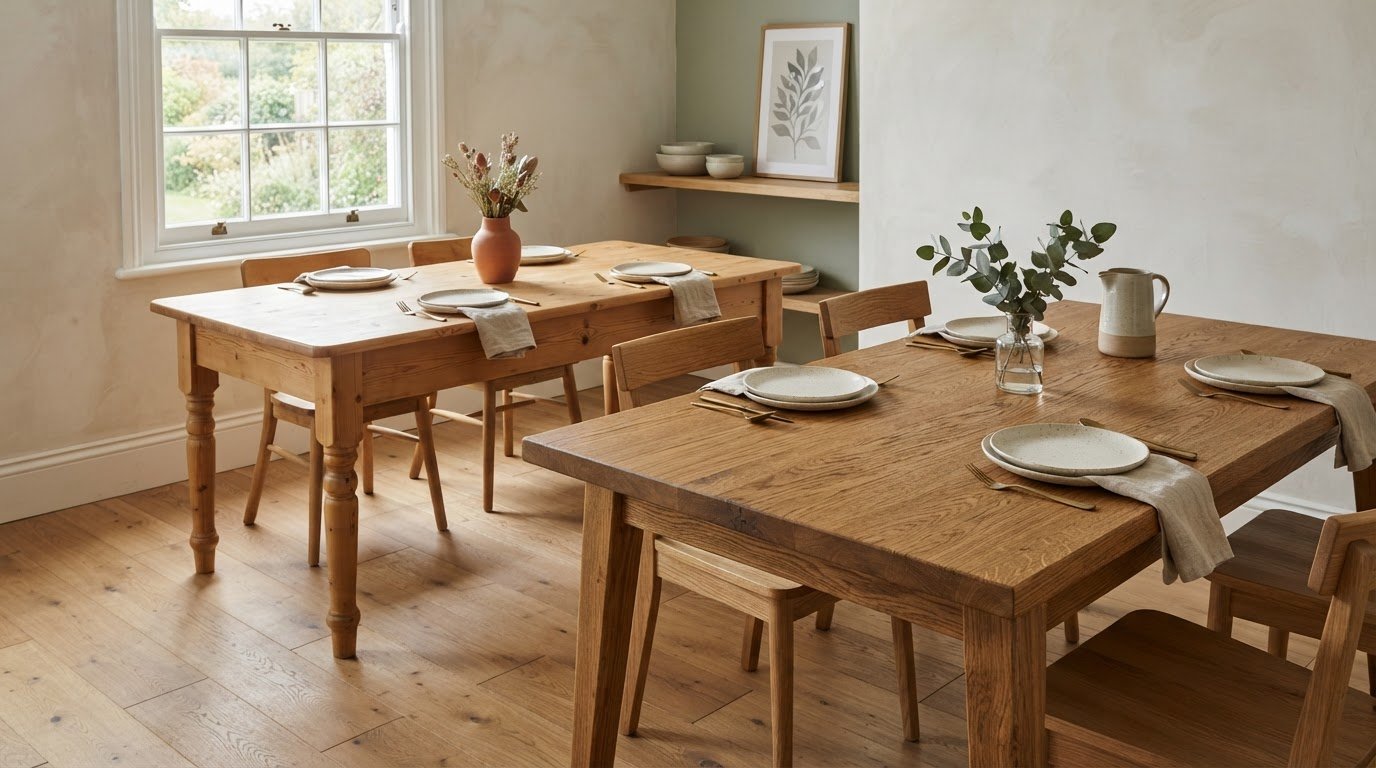
Appearance is one key difference. Solid oak shows distinctive grain and natural variation, so the surface may look less uniform. Veneer can create a more consistent pattern, although the grain may repeat. Laminate is a separate alternative, not wood veneer: it can imitate timber, is easy to maintain and may have vulnerable edges.
Veneer slices are typically 0.6mm to 1.2mm thick. That slim surface makes deep sanding risky: it can expose the core. Solid timber has the ability to be refinished multiple times, extending its lifespan. Regular polishing and oiling help care for solid wood; veneer also benefits from periodic polishing.
For sustainability, veneer uses less natural wood and can make efficient use of valued species. Solid wood uses more timber, but responsibly sourced pieces can offer long service and repairability. FSC is an example of a sourcing certification referenced for solid wood. Wood is natural, while veneer construction uses adhesive; non-toxic, low-emission adhesive options are available.
Choose solid wood for natural variation, repairability and long-term use; choose veneer for a lighter, often lower-cost surface with less movement.
Solid oak’s durability, workability and natural movement
Which wood types and veneer finishes are commonly used in UK furniture? Oak is a familiar solid-wood choice, alongside cherry, maple and walnut. Veneer can use those same woods as a surface layer, finished with polish or varnish to create shades from light to dark.
Solid oak combines strength with useful workability. A maker can cut, shape and join it into a sturdy piece of furniture, then sand and refinish it if the surface becomes worn. That repairability supports long-term value: solid wood can be refinished multiple times and may last for generations with care. Veneer’s thinner surface is harder to sand safely, so damage can be difficult to repair.
Durability doesn’t mean immunity to marks. A solid oak table can still scratch or dent, and moisture or heat can affect its finish. The advantage is that deeper wear may be repaired by working back the timber, rather than risking a thin surface layer. A protective finish and sensible placement away from damp or heat help preserve the wood.
Oak also responds to its surroundings. As humidity rises, solid timber expands; in drier conditions, it shrinks. Poorly designed joints or rigidly fixed components can restrict this movement, increasing the risk of splitting, cracking or warping. Veneer is generally more dimensionally stable, but heat or moisture can weaken its bond and cause peeling or bubbling.
Oak’s natural grain gives it individual character, and visible timber can bring a tactile, natural feel to a room. Particleboard with a veneer face may offer a more consistent surface, but it isn’t solid-timber construction. Neither material is automatically best: consider daily use, repairability and exposure to moisture.
For a dining table, choose solid oak if you value strength and the ability to refinish the surface. Choose veneer if a lighter construction and stability matter more, while protecting it from heat and moisture.
Choosing between solid wood and veneer
Start with the room, intended use and budget, then compare the appearance and repair options of each material. A dining table used every day calls for different priorities from a decorative cabinet in a quiet corner.
Budget and use choices
Veneer is often the lower-cost choice, which can suit a set of matching pieces or a temporary space. Its even appearance works well in a coordinated set, but surface damage may be difficult to repair. Solid wood generally costs more upfront; the option to sand and refinish it can make it a better fit for heavily used furniture you plan to keep.
Dining table materials
For a dining table, consider daily wear, room conditions and the finish you prefer. Solid timber suits people who value distinctive grain and repairability. Veneer offers a consistent appearance and less natural movement, but heat, moisture or impact can damage its surface. A protective finish and careful use matter for either material, especially around hot dishes and spills.
The material should also suit the part of the furniture. Solid wood can be shaped, cut and refinished, making it useful for exposed edges or components that may need future repairs. Veneered plywood can provide a stable panel for a cabinet side or bookcase back, where an even appearance matters more than sanding depth. Construction should allow for timber movement rather than trapping solid boards rigidly.
Before deciding, compare the whole piece, not just its visible face. Look at the edges, underside and drawer or door interiors to see where natural wood appears and where a core material is used. Then weigh the drawbacks against the intended use: a stable, uniform surface may matter most in one room, while long-term repairability may be a priority in another.
Choose the material that suits your intended use, preferred appearance and willingness to maintain or repair the furniture.
Solid wood furniture pros and cons
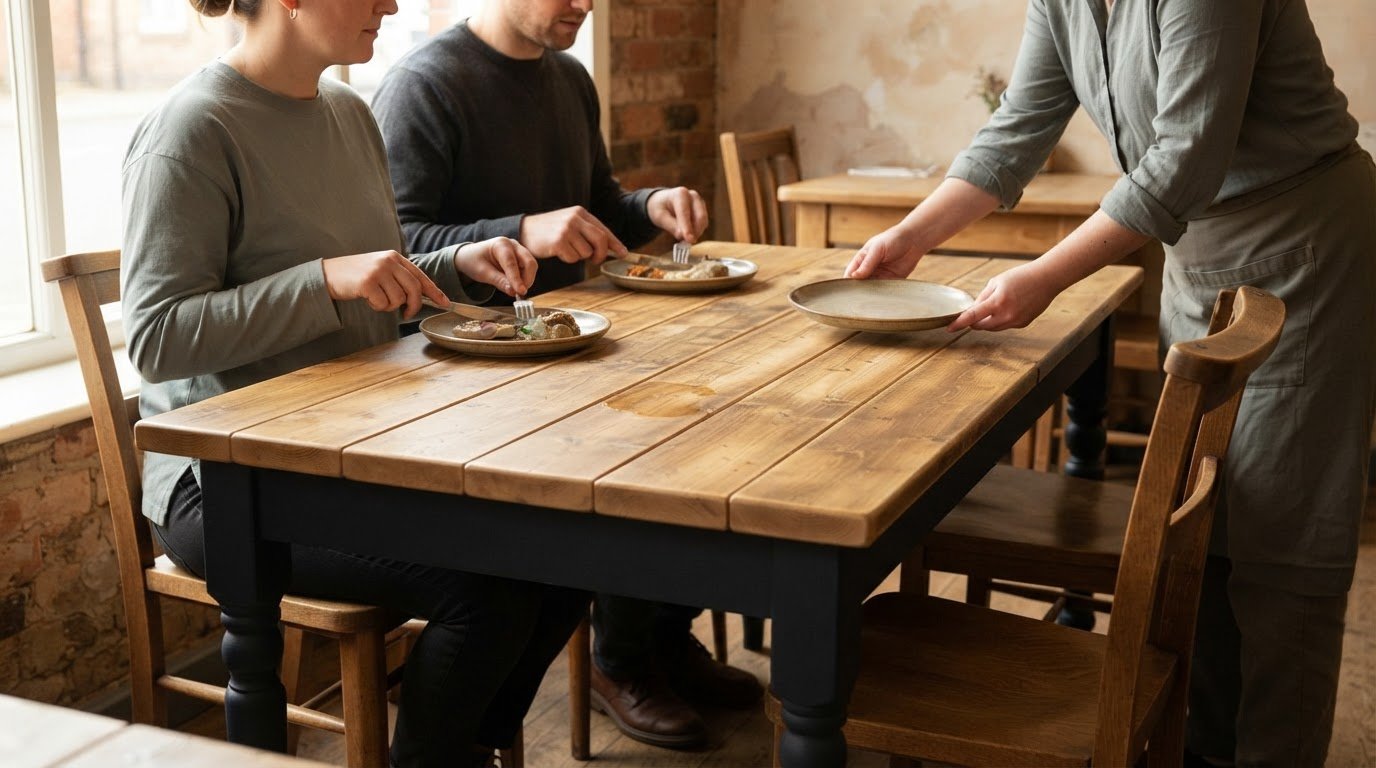
Solid wood’s advantages start with its construction: oak, walnut or pine runs through the material rather than appearing only on the surface. This makes it suitable for shaping and for furniture with exposed edges. Natural grain also gives each piece a distinctive look, so two oak tables won’t look exactly alike. A solid wood vs veneer furniture pros and cons comparison helps clarify which qualities matter most in your home.
There are trade-offs. Compared with veneer, solid wood is generally heavier and costs more upfront, which matters when moving furniture or working to a budget. Its natural construction also responds to humidity. Timber expands as moisture levels rise and shrinks in drier conditions, so well-planned joints need to allow for movement.
Long-term value: Oak or walnut can be sanded and refinished, helping address surface wear without replacing the whole piece.
Distinctive appearance: Natural grain and colour variation bring character, but won’t provide the uniform finish of repeated veneer patterns.
Substantial feel: A solid timber table is heavier than a comparable veneer piece, which can make repositioning less convenient.
Care needs: Moisture, heat, scratches and dents can still affect solid wood, so use coasters and wipe spills promptly.
Stability depends on construction, not just the type of wood. A broad oak tabletop needs fixings that accommodate seasonal movement; securing it rigidly can contribute to splitting or warping. Veneered engineered panels are generally less prone to movement, but damage to their thin wood layer can be harder to repair. These differences matter when weighing the solid wood vs veneer furniture pros and cons for a frequently used table.
Choose solid wood if repairability, natural variation and a substantial feel matter more than lower initial cost or lighter weight. Consider how the table’s finish, use and exposure to moisture will shape everyday care. Explore solid wood furniture options as you weigh those priorities.
The Table Guy: Prosecco Dining Tables
The Table Guy makes bespoke furniture, including Prosecco Dining Tables, for people weighing material, appearance and everyday use. If a dining table is your priority, consider how its timber, finish and construction will suit your room and routines. Farmhouse Tables, Bamboo & Hardwood Tables, and Scaffold Board & Pine Tables offer further styles and material choices to explore.
Solid wood’s grain and repairability may suit you if you want a table to keep and refinish over time. Your choice should still account for natural movement and care. Weigh those trade-offs before settling on a design.
For a table that reflects your preferences, visit thetableguy.co.uk.
Choose a table that feels right for your home
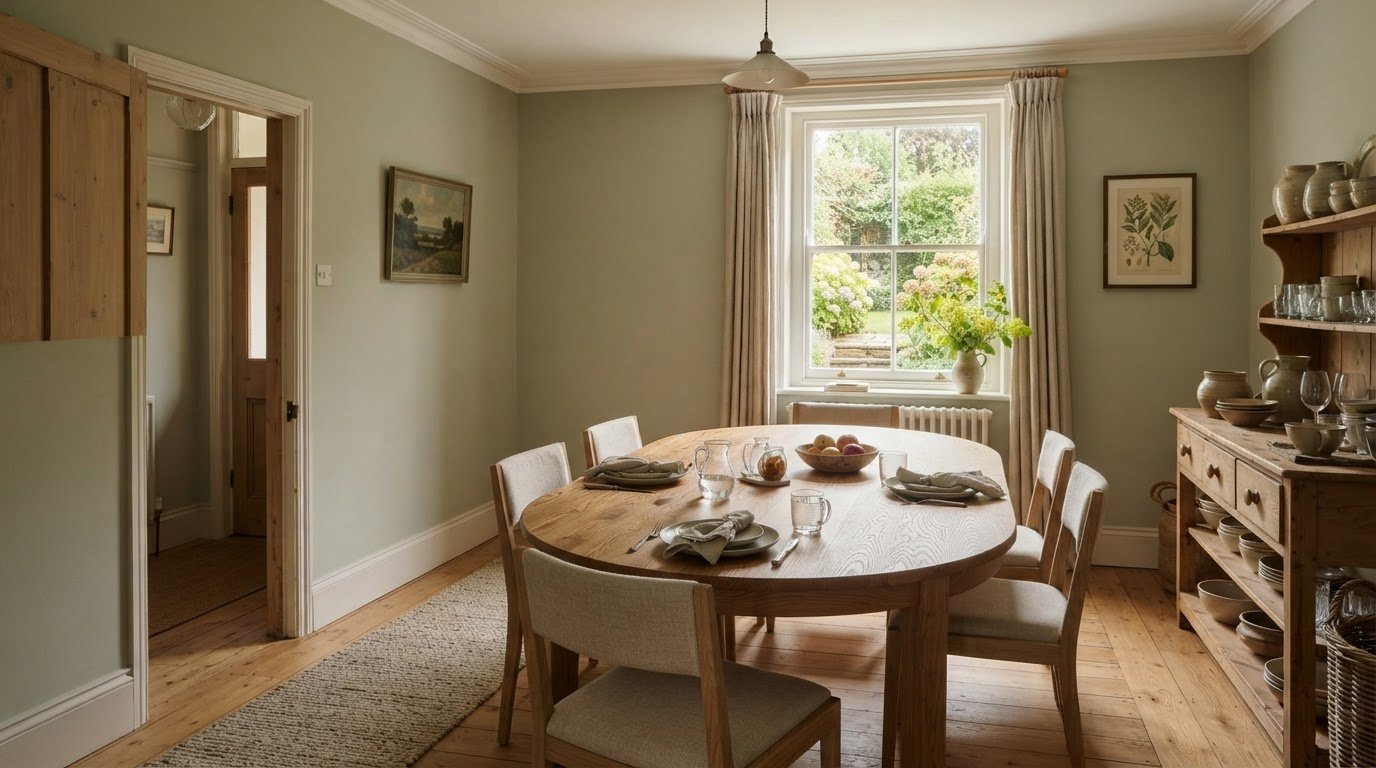
Picture the furniture in its setting, not just the materials on a page. Consider the room it will anchor, how you use it and the character you want it to bring. A table can be part of daily routines as well as a gathering place, so choose a style you’ll enjoy living with.
Use the pros and cons of solid wood versus veneer furniture to clarify your priorities. Think about how the table’s colour and grain will sit alongside your existing furniture, and whether you prefer an individual or consistent look. That helps turn a material comparison into a decision based on your home and habits.
The Table Guy can help you explore table styles and materials suited to your preferences. Take the next step and contact The Table Guy to discuss your ideas. Choose with care, and make room for a piece you’ll be glad to gather around.
Frequently Asked Questions
What is Wood Veneer?
Wood veneer is a thin slice of natural timber used as a surface layer on another material. For example, an oak veneer panel may cover MDF or plywood, giving it oak’s visible grain without using solid oak throughout. Check an exposed edge or the underside to see whether the timber continues through the panel or forms only its outer layer.
How do I tell the difference?
Inspect an unfinished edge, the underside and any cut-outs around handles or fittings. Solid wood usually shows grain continuing from the face around an edge, while veneer may reveal a different core beneath the surface. Repeated grain patterns can also be a clue, but appearance alone isn’t always conclusive. For example, check the back of a drawer as well as its front.
What Is Veneer Furniture?
Veneer furniture has a facing of real wood attached to a supporting panel, rather than solid timber throughout. The core may be MDF, plywood or particleboard, with the veneer providing the visible wood appearance. This construction lets furniture show oak, walnut or another species without using that timber for every internal part. Examine the edges and hidden surfaces to understand how the piece is built.
What is the difference between solid wood and wood veneer furniture?
Solid wood furniture is made from timber throughout its main wooden components; veneered furniture pairs a natural wood face with a core panel. That difference affects what you see at an edge, how the piece responds to wear and which repairs are practical. A veneered cupboard door, for example, may show oak on the outside but a different material along its cut edge.
What are the pros and cons of solid wood furniture?
Solid wood offers distinctive grain, sturdy construction and the ability to sand or refinish worn areas. Those qualities suit a frequently used table you intend to keep. The drawbacks include higher upfront cost, greater weight and a response to changing humidity. A solid timber tabletop also needs construction that allows natural movement, rather than fixings that hold it rigidly in place.
Which type of furniture lasts longer, solid wood or veneer?
Solid wood can often remain in use longer because it can be sanded, repaired and refinished as wear develops. Veneer can also remain serviceable, but damage to its thin facing may be harder to repair, particularly if it chips or peels. For example, a scratched solid-wood tabletop can be refinished, while sanding too deeply into a veneered surface may expose its core.
Comments